
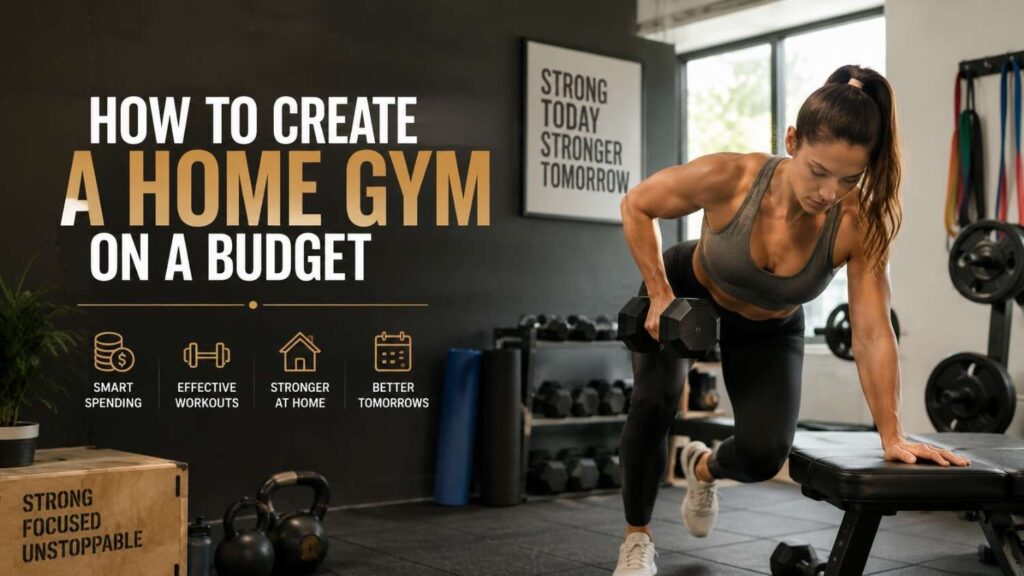
How to Create a Home Gym on a Budget: A Practical Step-by-Step Guide
Learning how to create a home gym on a budget is less about finding the cheapest possible equipment and more about spending carefully on items that support your actual training goals. A home gym can be as simple as a clear floor space with resistance bands and adjustable weights, or it can gradually develop into a dedicated strength-training area with a bench, rack, plates, and cardio equipment. The right setup depends on the person using it.
One of the biggest advantages of exercising at home is convenience. You remove travel time, reduce dependence on gym opening hours, and can organize the workout area around your preferred routine. However, those advantages disappear if the space becomes overcrowded, uncomfortable, or filled with equipment that does not match your training style.
The smartest approach is to build in stages. Begin with your goals, measure the space carefully, and identify the minimum equipment required for the exercises you want to perform. From there, establish a consistent routine before investing in specialized machines or accessories.
This approach also aligns with modern exercise guidance. The American College of Sports Medicine emphasizes that consistency and progressive resistance are more important than complicated programming for most healthy adults. Bodyweight exercises, resistance bands, and home-based training can all contribute to meaningful strength improvements.
A successful budget home gym is therefore not measured by how many machines it contains. It is measured by whether the space makes regular exercise easier, safer, and more sustainable.
Plan Your Fitness Goals, Space, and Budget First
Before purchasing any equipment, spend time planning the purpose of your home gym. This stage may seem less exciting than shopping, but it often determines whether the finished setup becomes a useful training environment or an expensive collection of unused equipment. Start by identifying what you want to achieve over the next six to twelve months. Your priorities might include improving general health, increasing strength, gaining muscle, improving mobility, supporting weight management, or simply exercising more consistently.
Next, examine the space available. A dedicated room is convenient, but it is not essential. Many effective home gyms operate from part of a garage, basement, bedroom, office, patio, or living room. What matters is whether the area provides enough clear movement space for the exercises you intend to perform safely.
A practical approach to home gym planning is to consider how the space will be used day to day, so the layout supports workouts rather than simply filling the room with equipment.
Your budget should also be tied to your goals rather than to an arbitrary shopping list. Instead of deciding that a home gym must contain a treadmill, bench, dumbbells, rack, and several accessories, decide which movements need to be supported first. If you can already train effectively with bodyweight exercises and bands, expensive equipment can wait.
ACSM recommends considering available space and selecting equipment that fits both the environment and the intended training routine. Multipurpose equipment is especially valuable in small areas because one item can support several exercises.
Planning first creates a clear purchasing hierarchy. It also makes it easier to distinguish equipment that adds real training value from equipment that simply looks impressive.
Define What You Actually Want to Train
Your fitness goals should determine nearly every major purchasing decision. Someone focused on general health may need very little equipment, while a person interested in heavy strength training will eventually require more substantial resistance. Similarly, a runner who wants supplementary strength work has different needs from someone whose primary goal is bodybuilding.
Begin by identifying the physical qualities you want to develop. Strength training requires progressively challenging resistance. Cardiovascular fitness requires sustained or repeated aerobic effort. Mobility work needs sufficient floor space and appropriate movement selection. General fitness usually benefits from a combination of these elements.
CDC guidance recommends that adults work toward at least 150 minutes of moderate-intensity aerobic activity per week, or an equivalent amount of vigorous activity, along with muscle-strengthening activity on at least two days involving major muscle groups. That does not mean every home gym needs separate machines for each goal.
A beginner might meet strength needs with squats, push-ups, rows, lunges, hinges, presses, and core exercises while performing aerobic activity outdoors. A more advanced trainee may eventually need heavier loading options, a bench, or specialized equipment.
Writing down your priorities prevents random purchases and helps you judge whether each piece of equipment genuinely supports your training plan.
Measure Your Available Workout Space
The amount of usable floor space matters more than the total size of the room. A garage may look large, for example, but storage cabinets, parked vehicles, low ceilings, doors, and shelving can significantly reduce the area available for exercise. Measure the space before purchasing anything large.
Consider the room needed while performing an exercise, not simply while storing the equipment. Dumbbells may occupy very little space on a rack, but lunges, carries, floor presses, and Romanian deadlifts require clearance around the body. Resistance-band movements can also require horizontal or overhead space that is easy to overlook.
Check ceiling height if you plan to press weights overhead, jump, use a pull-up bar, or install a rack. Door clearance matters as well, especially if equipment will be placed near entrances or folding furniture.
For small home gym setups, prioritize compact and multipurpose equipment. Adjustable dumbbells can replace several fixed pairs, while resistance bands can be stored in a drawer or wall organizer.
Before finalizing the layout, physically rehearse a few common movements in the empty area. Reach overhead, lie on the floor, step backward into a lunge, and simulate lifting weights. If the room feels restrictive without equipment, it will feel even more crowded once the gym is installed.
Choose Essential Home Gym Equipment Before Extras
Equipment selection is where many home gym budgets either remain under control or quickly become excessive. The key is to separate essential training tools from optional conveniences. For most beginners, essential equipment should support fundamental movement patterns such as squatting, hinging, pushing, pulling, carrying, and core stabilization. Specialized machines can usually wait until a specific training need appears.
One useful rule is to prioritize equipment that performs several functions. Resistance bands can support rows, presses, curls, extensions, lateral movements, and mobility work. Adjustable weights can be used for squats, lunges, presses, rows, carries, and many other exercises. A bench can later expand exercise selection further, but it is not always required during the earliest stage.
Bodyweight training deserves more attention than it often receives. Push-ups, squats, split squats, glute bridges, planks, step-ups, and other movements can develop useful strength without dedicated machines. ACSM’s recent resistance-training guidance recognizes bodyweight exercises and elastic resistance as effective approaches when they are performed consistently and progressed appropriately.
That does not mean equipment is unnecessary. External resistance becomes useful as you become stronger and need additional loading options. The important point is timing. Purchasing heavier equipment makes sense when it solves a real limitation rather than when it simply appears on a generic home gym checklist.
By building from versatile basics toward specialized equipment, you create a setup that remains affordable while still supporting long-term progress.
Start With Bodyweight Training, Bands, and a Mat
A simple exercise mat, resistance bands, and bodyweight movements can form the foundation of an effective home training program. This combination is especially useful for beginners because it allows you to learn fundamental movement patterns before adding significant external resistance.
Bodyweight exercises can train most major movement categories. Squats and split squats develop the lower body. Push-ups provide an accessible pressing movement. Glute bridges and bodyweight hip hinges introduce posterior-chain training. Planks and other controlled trunk exercises develop core stability. Depending on your setup, bands can then add rowing, pressing, curling, shoulder, and lower-body variations.
Resistance bands are useful because they take up very little storage space and can provide several levels of resistance. They also make it easy to change exercise difficulty without buying multiple large machines. ACSM specifically recognizes elastic resistance and home-based routines as useful forms of strength training.
An exercise mat is not mandatory, but it can improve comfort during floor-based movements and create a clear training area.
I recommend starting with these simple tools and using them consistently for several weeks. Doing so reveals which exercises you enjoy, which movements become too easy, and where additional equipment would genuinely improve your program.
Budget Home Gym Equipment by Training Need
| Equipment Category | Primary Purpose | Space Requirement | Budget Advantage | Best Use |
|---|---|---|---|---|
| Exercise Mat | Floor-based training and mobility | Very Low | Low-cost foundation | Core work, stretching, bodyweight exercises |
| Resistance Bands | Adjustable resistance training | Very Low | Affordable and portable | Full-body resistance workouts |
| Adjustable Dumbbells | Progressive strength training | Low | Multiple weights in one system | Strength and muscle-building workouts |
| Kettlebell | Dynamic and full-body resistance | Low | Supports multiple movements | Swings, squats, carries, presses |
| Weight Bench | Expands exercise selection | Moderate | Adds versatility to existing weights | Presses, rows, seated exercises |
| Pull-Up Bar | Upper-body pulling strength | Low | Replaces larger pulling equipment | Pull-ups, chin-ups, hanging exercises |
| Barbell and Rack | Heavy progressive resistance | High | Long-term strength investment | Squats, presses, deadlifts |
| Cardio Machine | Indoor aerobic exercise | High | Useful only with regular use | Walking, cycling, rowing, or running |
Practical takeaway: Start with the lowest-cost equipment that supports your current training goals, then upgrade when your existing setup limits progression.
Add Adjustable Resistance as You Progress
As your strength improves, bodyweight exercises and light bands may no longer provide enough resistance for every movement. This is usually the point where adjustable dumbbells, loadable dumbbell handles, kettlebells, or another flexible resistance system become valuable.
Adjustable equipment makes particular sense in a budget gym because different exercises require different loads. A weight that feels challenging during a shoulder raise may be far too light for squats, rows, or Romanian deadlifts. Purchasing several fixed dumbbell pairs can therefore become expensive and consume considerable storage space.
A compact adjustable system gives you more flexibility while keeping the footprint smaller. The exact product type matters less than whether it offers suitable loading increments, feels stable in use, and supports the exercises you plan to perform.
A bench can be considered after you have established a regular strength routine. It can support pressing, seated movements, step-ups, split squats, and some rowing variations, but beginners can often use floor presses and standing exercises initially.
Think of resistance equipment as a progression tool rather than an entry requirement. Add it when your current exercises stop challenging you appropriately or when your program needs movements that cannot be performed effectively with your existing setup.
| Priority | Equipment | Main Benefit | Best For |
|---|---|---|---|
| 1 | Exercise mat | Floor comfort and dedicated exercise area | Most beginners |
| 1 | Resistance bands | Versatile, compact resistance | Small spaces |
| 1 | Bodyweight exercises | No equipment cost | All levels |
| 2 | Adjustable weights | Progressive loading | Strength and muscle goals |
| 2 | Weight bench | Expands exercise selection | Regular resistance training |
| 3 | Pull-up solution | Vertical pulling | Intermediate trainees |
| 3 | Barbell and rack | Heavy progressive loading | Strength-focused users |
| Optional | Cardio machine | Convenient indoor cardio | Users who will use it consistently |
How to Create a Home Gym on a Budget Without Wasting Money
Building an effective home gym cheaply requires more discipline than simply looking for discounted equipment. A low price does not automatically make something a good purchase. If an item does not suit your training, does not fit your space, or duplicates equipment you already own, even a major discount can still represent wasted money.
The most practical strategy is to let your training routine determine your purchases. Begin with a basic setup, exercise consistently, and observe where limitations appear. Perhaps your resistance bands no longer provide enough challenge for lower-body exercises. Maybe floor presses are limiting your preferred range of motion. You might discover that outdoor cardio works perfectly and a treadmill is unnecessary. These experiences give you useful information that a generic shopping guide cannot provide.
Buying gradually also allows you to spread costs over time. Instead of spending heavily before establishing a routine, you can invest as your needs become clearer and your commitment becomes stronger.
ACSM’s 2026 resistance-training guidance emphasizes consistency and effort rather than unnecessary complexity. That principle is valuable financially as well as physiologically. A basic program performed regularly can be more productive than an elaborate home gym used inconsistently.
The goal is not to create the cheapest gym possible. Extremely low-cost equipment that is uncomfortable, unreliable, or unsuitable can be poor value. Instead, aim for the lowest-cost setup that safely supports your current goals and provides enough room for progression.
Build Your Home Gym in Spending Phases
Dividing the project into spending phases makes budgeting more predictable and reduces impulse purchases. Each phase should solve a specific training need before you move to the next level.
Phase 1 should focus on starting. Clear a safe exercise area and use bodyweight movements. Add inexpensive basics such as a mat or resistance bands if they improve comfort or exercise variety. At this stage, your priority is establishing a repeatable workout routine.
Phase 2 introduces progressive resistance. When your current movements become too easy, consider adjustable dumbbells, a kettlebell, weighted vest, or another resistance method suited to your goals and space.
Phase 3 expands exercise options. A bench, pull-up solution, heavier resistance, or improved storage may become worthwhile once you know your routine well enough to identify specific limitations.
Phase 4 is for specialization. This is where a rack, barbell, cable system, exercise bike, treadmill, rowing machine, or other large equipment may enter the picture.
This phased approach has two major advantages. It protects your budget and ensures that later purchases are based on real training experience. Instead of guessing what you might use, you invest in equipment you already know will fit your routine.
Home Gym Budget-Building Roadmap
| Building Phase | Main Objective | Recommended Focus | What to Avoid | Progression Trigger |
|---|---|---|---|---|
| Phase 1: Start | Establish a consistent workout habit | Bodyweight exercises, mat, resistance bands | Buying large machines immediately | Basic exercises become too easy |
| Phase 2: Build Resistance | Increase training options | Adjustable dumbbells, kettlebell, or compact weights | Buying several single-purpose weights | Current resistance limits progress |
| Phase 3: Expand | Add useful exercise variations | Bench, pull-up solution, heavier resistance | Duplicating equipment with similar functions | Workout program requires additional movements |
| Phase 4: Specialize | Support specific training goals | Rack, barbell, cable system, or cardio equipment | Buying equipment because it looks impressive | Consistent training creates a clear equipment need |
| Phase 5: Optimize | Improve organization and convenience | Storage, flooring, layout improvements | Spending heavily on unnecessary upgrades | Existing setup is functional but inconvenient |
Budget principle: Let your training needs determine your next purchase instead of trying to build a complete gym in one shopping trip.
Buy Used Equipment Carefully and Skip Unnecessary Upgrades
Secondhand equipment can be one of the easiest ways to reduce home gym costs, especially for simple and durable items such as conventional plates, racks, benches, or fixed dumbbells. However, used equipment should be evaluated based on condition rather than price alone.
Inspect structural components carefully. Look for cracks, severe rust, bent frames, damaged welds, missing fasteners, worn adjustment pins, frayed cables, or unstable joints. Upholstery damage may be mostly cosmetic, but problems involving load-bearing parts can affect safety. If an item has been modified from its original design, make sure you understand exactly what was changed before using it.
Be especially cautious with complex electronic cardio machines. Replacement parts, motors, control boards, belts, and screens can make an inexpensive purchase costly if repairs are needed soon afterward.
The same budget discipline applies to new accessories. Before buying anything, ask what training problem it solves. If you already have an effective way to perform the same movement, the purchase may not be necessary.
A good home gym rarely appears complete on the first day. It develops as the owner’s training becomes more specific. Skipping unnecessary upgrades keeps both the room and the budget focused on equipment that genuinely contributes to progress.
Set Up a Safe and Functional Workout Area
A home gym should be easy to use, but convenience should not come at the expense of safety. Equipment needs enough surrounding space for normal movement, storage should not create trip hazards, and any item requiring anchoring or assembly should be installed according to the manufacturer’s instructions.
Start by creating clearly defined training and storage zones. Even in a small room, separating the area where you exercise from the place where weights, bands, accessories, and personal items are stored makes the space easier to navigate. Equipment that regularly has to be moved out of the way can quickly become frustrating.
Lighting and ventilation matter as well. A room does not need to look like a professional fitness studio, but you should be able to see equipment clearly and exercise without excessive heat or poor airflow. Garages and basements may require particular attention to seasonal temperature changes and moisture.
The floor also deserves consideration. Heavy equipment, repeated movement, dropped objects, or chair and bench legs can affect some flooring materials differently. The appropriate solution depends on the room, type of training, and loads involved.
Finally, treat the layout as part of your workout system. If every session begins with moving furniture, finding missing bands, or clearing clutter, the home gym becomes less convenient over time. A functional setup should reduce friction. Ideally, you should be able to enter the space and begin training with minimal preparation.
Think About Flooring, Storage, and Clear Movement Space
Home gym flooring serves several purposes, but the appropriate solution depends on how you train. Someone doing yoga, mobility work, and light resistance exercises may only need an exercise mat. A strength-focused setup with heavier weights may require a more durable surface that protects the floor and provides a stable base.
Storage should be planned at the same time. Bands, handles, collars, small weights, and accessories can quickly clutter the floor if they do not have assigned locations. Shelving, compact racks, bins, or wall-mounted organizers can keep the training area clear without requiring expensive custom storage systems.
Avoid arranging the room so tightly that equipment blocks natural movement. Leave enough room around benches, dumbbells, and exercise stations to step, turn, reach, and change position comfortably.
For smaller rooms, budget-friendly storage and a measured layout can help keep equipment organized while preserving enough open floor space for comfortable movement.
One useful test is to simulate your workout before completing the layout. Lie down as if performing a floor press, step backward into a lunge, reach overhead, and move through a hip hinge. If you repeatedly encounter walls, furniture, lights, or stored equipment, the layout needs adjustment.
The most attractive setup is not necessarily the most functional. Prioritize clear movement paths, easy equipment access, and enough open space to perform your routine without constant rearrangement.
Prioritize Technique and Appropriate Progression
A well-equipped home gym cannot compensate for poor exercise selection or uncontrolled technique. Beginners should choose movements they can perform confidently and gradually increase difficulty as strength, coordination, and experience improve.
The U.S. physical-activity guidelines emphasize that inactive individuals can begin with smaller amounts of activity and progress gradually toward recommended levels. This is a practical approach for home training as well. You do not need to begin with heavy weights, advanced exercises, or long sessions in order to make progress.
For resistance training, focus first on controlled repetitions and stable positioning. When a movement becomes consistently manageable, progression can come from additional resistance, more repetitions, increased range of motion, or a more challenging exercise variation depending on your goals.
Equipment safety is equally important. Benches, pull-up bars, racks, suspension systems, and other load-bearing equipment should be assembled and used according to manufacturer instructions. Weight limits and anchoring requirements should never be ignored.
People with injuries, chronic health conditions, significant mobility limitations, or uncertainty about exercise suitability may benefit from individualized advice from a qualified healthcare or exercise professional.
A budget home gym should make training more accessible, not encourage rushed progression. Safe technique and gradual development provide much better long-term value than lifting heavier simply because new equipment is available.
Related Articles
Make Your Budget Home Gym Work Long Term
The long-term value of a home gym depends far more on consistency than on equipment quantity. Many people become enthusiastic during the setup phase, purchase several items, and then discover that their routine is too complicated or inconvenient to maintain. A successful home training environment should make exercise easier to begin and simpler to repeat.
One of the strongest advantages of training at home is reduced friction. There is no commute, no need to wait for equipment, and fewer scheduling limitations. To preserve those benefits, keep the space organized and the workout plan realistic.
Current ACSM resistance-training guidance emphasizes consistency and individualization. This is especially relevant for home exercise because you are responsible for both programming and equipment selection. You do not need to reproduce a commercial gym routine exactly. Instead, create a plan that uses the tools available and suits the time you can realistically commit.
Tracking progress can also help you decide when an upgrade is justified. Record exercises, resistance, repetitions, or other useful measures. If you are continuing to progress with your existing equipment, there may be no reason to buy anything new.
Over time, your goals may change. A general fitness setup might gradually develop into a strength-focused gym, while another person may realize that they prefer outdoor cardio and need fewer machines than originally expected.
A home gym should evolve around your habits. The best long-term setup is one that remains useful as your experience and training needs develop.
Create a Simple Weekly Training Routine
A home gym becomes much more useful when it is paired with a realistic weekly routine. Beginners often benefit from keeping the schedule simple enough that it can be repeated consistently rather than trying to train every day.
A basic full-body strength routine might include two or three sessions each week. Each session can include a squat or split-squat pattern, a pushing movement, a pulling movement, a hip-hinge exercise, and some form of core training. The specific exercises depend on available equipment and individual ability.
Aerobic activity can be performed on separate days or alongside shorter strength sessions. CDC guidance recommends that adults work toward at least 150 minutes of moderate-intensity aerobic activity each week, or 75 minutes of vigorous activity, or an equivalent combination. Strengthening activities involving major muscle groups are recommended on at least two days.
Those recommendations do not require a single long workout. Activity can be spread across the week and broken into smaller sessions.
For beginners, this flexibility is useful. A 30-minute workout performed regularly may be far more sustainable than an ambitious 90-minute plan that is repeatedly skipped.
Build the schedule around your actual lifestyle, then choose equipment that helps you follow that schedule more consistently.
Upgrade Only When Your Current Equipment Limits You
One of the most effective ways to control home gym spending is to make every upgrade solve a clearly identified limitation. Your training should create the shopping list rather than the other way around.
For example, if lower-body exercises remain challenging with your current resistance, you may not need heavier weights yet. If you eventually reach a point where your available load no longer allows meaningful progression, increasing resistance becomes a logical purchase.
The same reasoning applies to a bench. Floor pressing can be effective for many users, but a bench may become useful if your program requires additional range of motion or supported exercises. A pull-up bar becomes more relevant when vertical pulling is part of your routine. A treadmill may become valuable when outdoor conditions consistently prevent the aerobic exercise you prefer.
This approach helps avoid copying other people’s gyms without considering your own needs. Equipment that is essential to a powerlifter may be unnecessary for someone focused on general health.
Before upgrading, ask three questions: Is my current setup preventing progress? Will this item be used regularly? Does it fit safely in the available space?
If all three answers are yes, the purchase is easier to justify. If not, continuing with your current equipment may be the smarter choice.
Quick Answer About How to Create a Home Gym on a Budget
Creating an affordable home workout space starts with deciding what you want to achieve, how much room you actually have, and which exercises you plan to perform regularly. The biggest mistake beginners make is purchasing several pieces of equipment before knowing whether those items fit their routine. A better strategy is to begin with a small number of versatile tools, learn how to use them properly, and expand only when your current setup limits your progress.
For many people, resistance bands, an exercise mat, bodyweight movements, and some form of adjustable resistance can provide enough variety for full-body strength training. Current American College of Sports Medicine guidance emphasizes that effective resistance training does not require complicated machines or highly specialized programs. Consistency, appropriate effort, and regular progression matter more for most healthy adults.
The same principle applies to cardiovascular exercise. You do not automatically need a treadmill, rower, or exercise bike simply because commercial gyms contain them. Walking, outdoor cycling, running, dancing, or other enjoyable activities can provide aerobic exercise without increasing your equipment budget.
The most practical approach is therefore to build gradually. Start with equipment that solves an immediate training need, organize the space safely, and make your workout environment convenient enough to use consistently. A modest setup that you actually use is more valuable than an expensive room full of equipment that rarely becomes part of your routine.
Frequently Asked Questions About How to Create a Home Gym on a Budget
Budget home gym questions often focus on finding the cheapest equipment, but cost should not be the only consideration. The best setup is the one that matches your goals, fits your available space, and supports a routine you can maintain safely. A beginner focused on general fitness may need only a few versatile items, while an experienced strength trainee may eventually need heavier resistance and more specialized equipment.
Another common misunderstanding is that a home gym must include a dedicated cardio machine. In reality, aerobic activity can take many forms, including walking, cycling, running, dancing, and other activities that raise heart rate appropriately. A machine is useful only if it makes regular exercise more convenient for you.
Space is also less restrictive than many people assume. Compact resistance equipment, folding benches, bands, mats, and adjustable weights can support substantial training in relatively small areas. The challenge is usually organization rather than room size.
When buying equipment, consider durability, safety, storage requirements, and versatility alongside price. The least expensive option may not provide the best value if it fails quickly or does not suit your exercises.
The following questions address common search concerns from beginners and more experienced users who want to build an efficient home training environment without unnecessary spending.
What is the cheapest way to build a home gym?
The cheapest practical approach is to begin with exercises that require little or no dedicated equipment. Bodyweight squats, split squats, push-ups, glute bridges, planks, and similar movements can provide a useful starting point for many beginners.
Resistance bands can then add pulling movements and additional resistance without requiring much space or a large investment. An exercise mat may also improve comfort for floor-based training.
ACSM’s current resistance-training guidance recognizes bodyweight exercise, elastic resistance, and home-based routines as legitimate ways to improve strength and physical function when training is performed consistently.
The key is to avoid buying equipment before you know what your routine requires. Train with a basic setup for several weeks and identify where progression becomes difficult.
When a genuine limitation appears, add one versatile piece of equipment rather than purchasing a complete gym package. Adjustable weights are often useful because a single system can support many exercises and resistance levels.
Starting small protects your budget and gives you time to learn which types of training you actually enjoy.
What equipment should I buy first for a home gym?
Your first equipment purchases should support the exercises you plan to perform most often. For many beginners, resistance bands, an exercise mat, and some form of adjustable resistance provide more practical value than specialized machines.
Bands are useful for rows, presses, shoulder exercises, arm movements, lower-body resistance, and mobility work. A mat provides a cleaner and more comfortable area for floor exercises. Adjustable dumbbells or another scalable resistance system can be added when you need heavier loading.
Avoid choosing equipment simply because it appears on popular home gym lists. A treadmill is not essential for someone who enjoys walking outside, and a heavy barbell setup may be unnecessary for a beginner still progressing with lighter resistance.
Consider storage and space as well. Compact equipment is particularly useful when your gym shares a bedroom, office, or living area.
The best first purchase is therefore not universal. It should solve a specific problem in your current routine. If you cannot explain how an item will be used each week, you probably do not need to buy it yet.
Can I build an effective home gym in a small room?
Yes. A small room can support effective workouts if the equipment and layout are chosen carefully. The most important factor is preserving enough clear space to move safely rather than trying to fill the room with as much equipment as possible.
Compact tools work especially well. Resistance bands require little storage, adjustable dumbbells can replace multiple fixed-weight pairs, and folding or compact benches can provide additional exercise options without permanently occupying a large area.
Vertical storage can also improve the layout. Wall organizers, shelves, and narrow racks keep accessories off the floor and leave more usable training space.
Before purchasing equipment, measure the room and simulate the movements you expect to perform. Check whether you can lunge, lie down, reach overhead, and move weights without hitting walls or furniture.
ACSM recommends selecting home gym equipment that matches the available space and intended training routine. Multipurpose items are particularly useful when room is limited.
A well-organized small home gym can therefore be more functional than a larger space filled with equipment that is difficult to access or rarely used.
Are resistance bands enough for home workouts?
Resistance bands can be enough for many types of home training, particularly for beginners and users focused on general fitness. They can provide resistance for rows, presses, curls, triceps extensions, lateral movements, squats, hip exercises, and mobility work.
Their biggest advantage is versatility. Different band strengths and exercise positions can change the level of resistance without requiring several large pieces of equipment. Bands are also easy to store and transport.
ACSM’s resistance-training guidance recognizes elastic resistance as a useful form of strength training. That makes bands a legitimate training tool rather than simply an accessory.
However, whether bands remain sufficient long term depends on your goals. Someone pursuing substantial increases in maximal strength may eventually need heavier and more precisely adjustable resistance. A beginner may continue progressing with bands for considerably longer.
The important question is whether your current exercises remain challenging enough to support improvement. If they do, additional equipment is not automatically necessary.
Bands can therefore form the foundation of an effective budget gym, with weights or other equipment added only when your training requires them.
Do I need a treadmill or exercise bike?
No. A treadmill, exercise bike, rower, or other cardio machine is optional rather than essential for a home gym. The purpose of cardiovascular training is to perform appropriate aerobic activity, not to use a particular machine.
Walking, outdoor running, cycling, hiking, dancing, stair climbing, and many recreational activities can contribute toward weekly aerobic exercise targets. CDC guidance recommends that adults accumulate appropriate amounts of moderate or vigorous aerobic activity, but it does not require specialized fitness equipment.
A cardio machine may still be valuable if it solves a practical problem. Someone living in an area with severe weather, limited outdoor space, or safety concerns may find indoor equipment much more convenient. The same is true for a user who strongly prefers cycling or treadmill walking and knows the machine will be used regularly.
Before buying one, consider space, noise, maintenance, electrical requirements, and the likelihood of regular use.
For many budget-conscious users, delaying a cardio machine allows more money to be directed toward versatile strength equipment while aerobic exercise is performed elsewhere.
Is used home gym equipment worth buying?
Used equipment can offer excellent value when the item is durable, mechanically simple, and in good condition. Fixed dumbbells, weight plates, racks, and some benches can last for many years, making secondhand options worth considering.
Inspection is essential. Look for cracks, bent components, unstable frames, severe corrosion, damaged welds, missing hardware, and worn adjustment systems. Equipment that carries body weight or heavy loads should feel stable and operate as intended.
Be more cautious with complex cardio machines. Treadmills, bikes, and rowers can contain motors, control boards, belts, sensors, and other parts that may be expensive to replace. A low purchase price can become poor value if repairs are required immediately.
Whenever possible, identify the model and check the manufacturer’s documentation. Confirm weight limits, assembly requirements, available replacement parts, and whether the product has been modified.
Used equipment is worth buying when the savings are meaningful and the condition is reliable. It is not worth choosing simply because it is cheaper.
Safety, durability, and suitability for your routine should remain more important than the initial discount.
What equipment do I need when learning how to create a home gym on a budget?
There is no single equipment list that suits every person. Your needs depend on your goals, available space, current strength level, preferred exercises, and whether you perform cardio elsewhere.
A simple starting setup might include a clear workout area, resistance bands, an exercise mat, and bodyweight movements. Adjustable dumbbells or another progressive resistance system can be added when your current exercises become too easy.
A bench, pull-up solution, heavier weights, or rack may become useful later, but these items should be connected to specific training needs rather than purchased automatically.
For general health, remember that strength training is only one part of physical activity. Aerobic exercise can be performed outdoors or through activities that require little equipment.
Think of the gym as a system that evolves. Begin with enough equipment to follow a consistent routine, then track your progress.
If your current setup still allows you to increase difficulty appropriately, there may be no reason to expand. Add equipment only when it improves safety, convenience, exercise selection, or progression.
Conclusion
Creating a useful home gym does not require transforming a spare room into a commercial fitness facility. The most effective setup is usually the one that matches your goals, fits the available space, and contains equipment you will actually use consistently. For beginners, this often means starting with bodyweight exercises, resistance bands, a mat, and adjustable resistance rather than purchasing several expensive machines at once.
Planning is the most important first step. Define whether your priority is general fitness, strength, muscle development, aerobic conditioning, or a combination of goals. Measure the space carefully and think about how exercises will be performed, not just where equipment will be stored.
From there, build progressively. Add equipment when your training reveals a genuine limitation. This protects your budget and ensures that every purchase contributes to your routine.
Safety and organization should also remain priorities. Clear movement space, appropriate flooring, secure storage, correct equipment assembly, and gradual exercise progression make the gym easier and safer to use.
Most importantly, remember that equipment is only a tool. Consistency drives results. A simple gym used several times each week is generally more valuable than an elaborate setup that becomes inconvenient or overwhelming.
Learning how to create a home gym on a budget is ultimately about removing barriers to regular exercise. When the space is practical, organized, and aligned with your needs, it becomes easier to turn fitness into a sustainable part of everyday life.
Start Small and Focus on Consistency
Starting small gives you the opportunity to develop an exercise habit before committing significant money or space to equipment. This is especially valuable for beginners who are still discovering which forms of training they enjoy and which exercises fit comfortably into their schedule.
Begin with a routine you can realistically repeat. Two or three strength sessions each week combined with appropriate aerobic activity can provide a clear structure without requiring daily training.
Use simple equipment effectively before expanding. Resistance bands, bodyweight movements, and adjustable weights can support a wide range of exercises when they are programmed thoughtfully.
ACSM’s current guidance emphasizes that consistency matters more than unnecessary complexity for most healthy adults. That principle should shape both your workouts and your spending decisions.
A home gym is successful when it reduces barriers to exercise. If the equipment is easy to access, the room is organized, and the workouts fit your lifestyle, you are more likely to use the space regularly.
Focus first on creating that consistency. Equipment upgrades can come later as your training experience becomes clearer.
Build the Gym Around Your Progress
Your home gym should develop in response to your training rather than according to someone else’s equipment list. As your strength, experience, goals, and preferences change, the setup can change with them.
Track your workouts so you can identify genuine limitations. If adjustable dumbbells no longer provide enough load for certain movements, heavier resistance may be justified. If floor-based pressing restricts the exercise options you want, a bench may add value. If poor weather repeatedly disrupts cardio training, an indoor machine may become more useful.
This progression-based approach keeps spending focused. It also prevents the space from becoming crowded with items that seemed attractive at the time of purchase but never became part of your routine.
Review the gym periodically. Ask which equipment you use most often, which items could be removed, and what specific training need is currently difficult to meet.
A useful home gym is never defined by completeness. It is defined by whether it supports your current goals efficiently.