
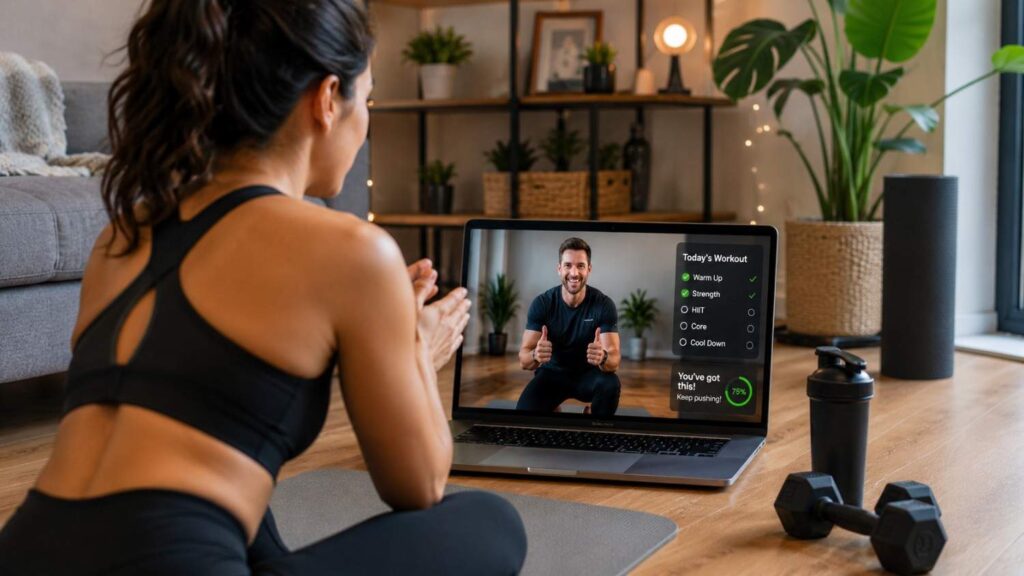
How to Stay Motivated with Virtual Fitness Coaches
Virtual fitness coaching has made professional exercise guidance more accessible to people who cannot or do not want to attend regular in-person training sessions. Through video calls, messaging platforms, mobile applications, recorded demonstrations, wearable devices, and online progress dashboards, a virtual fitness coach can provide personalized workouts, technique feedback, reminders, and accountability from almost anywhere.
Convenience, however, does not automatically produce consistency. Exercising at home removes the need to travel to a gym, but it also removes some of the external structure that encourages people to show up. A scheduled gym session may feel like a formal appointment, while an online workout can be postponed with a single tap. Work responsibilities, family demands, limited space, fatigue, and digital distractions can make even a well-designed program difficult to follow.
Understanding how to stay motivated with virtual fitness coaches therefore requires more than choosing a popular application or booking occasional video calls. Sustainable motivation comes from combining clear goals, realistic scheduling, regular communication, visible progress, flexible workout options, and personal responsibility. Your coach should support this system, but the system must also fit your real life.
Regular physical activity is valuable for overall health and well-being. Current CDC guidance states that adults should work toward at least 150 minutes of moderate-intensity aerobic activity each week, or an equivalent amount of vigorous activity, as well as muscle-strengthening activity on two or more days. That weekly activity can be divided into shorter sessions, which means a useful fitness routine does not need to depend on long daily workouts.
A virtual coach can help translate broad health recommendations into a practical plan. The following sections explain how to create a coaching relationship and workout routine that remain useful even when your initial excitement begins to fade.
Understand Why Virtual Workout Motivation Disappears
A temporary loss of workout motivation does not automatically mean that you are lazy, undisciplined, or incapable of following an online fitness program. Motivation naturally rises and falls in response to stress, sleep, workload, physical discomfort, progress, emotional well-being, and changes in routine. Even highly committed people experience days when exercise feels less appealing than usual.
The mistake is assuming that a lack of enthusiasm is the problem itself. In many cases, low motivation is a signal that something within the plan needs attention. The workout may be too demanding, the schedule may be unrealistic, the goal may no longer feel meaningful, or the coaching format may not provide enough accountability. Instead of criticizing yourself, examine the situation as objectively as possible.
This is where a virtual coach can provide important support. A qualified coach should help you distinguish between normal resistance and a genuine problem with the program. They can review your training history, ask about your energy and schedule, and recommend practical adjustments. That might mean reducing the session length, changing the workout time, simplifying an exercise, adding variety, or temporarily lowering the training volume.
Understanding the source of reduced motivation prevents unnecessary program changes. You do not always need a new coach, a more intense routine, or a different fitness application. Sometimes you only need a clearer purpose, a smaller first step, or a plan that reflects the demands of your current week.
Separate Temporary Excitement from Personal Motivation
Many people begin online fitness coaching during a period of high enthusiasm. They may want to lose weight before an event, improve their appearance, complete a physical challenge, or make a dramatic lifestyle change. These goals can create strong initial energy, but that excitement often becomes weaker once the routine feels familiar and progress becomes less visible.
Long-term motivation is more stable when the goal is connected to something personally meaningful. You may want enough energy to play with your children, improved mobility for everyday tasks, greater confidence, better stress management, stronger physical independence, or the ability to participate in a sport or hobby. These reasons are less dependent on a deadline or a number on a scale.
Write your main reason for exercising in one clear sentence. For example: “I want to become stronger so that everyday activities feel easier and I can remain physically independent.” Share that statement with your coach and use it when reviewing your progress.
This does not mean that appearance or performance goals are unimportant. It means they should be connected to a broader purpose. When enthusiasm falls, your deeper reason provides direction. You may not feel excited about every workout, but you can still recognize why completing it matters.
Identify the Actual Barrier
Saying “I have no motivation” can hide several different problems. You may have enough motivation but lack time, confidence, energy, equipment, privacy, or clarity. The solution depends on identifying the exact barrier rather than treating every missed workout as a willpower problem.
Ask yourself one direct question: What specifically makes the next workout difficult to begin? Your answer should describe an observable obstacle. “The session takes longer than my available lunch break” is more useful than “I am unmotivated.” “I do not understand the exercise demonstration” is more useful than “The program is not working.”
Once you identify the barrier, discuss it openly with your coach. A time problem may require a 20-minute workout. Uncertainty may require a live technique review. Boredom may require controlled variety. Persistent soreness may indicate that the training load or recovery plan needs attention.
Keep a short barrier log for two weeks. Record when you planned to exercise, whether you completed the session, and what made starting easier or harder. Patterns will usually become visible. You may discover that evening workouts regularly conflict with family responsibilities or that sessions requiring equipment are skipped more often. Virtual fitness coach motivation improves when the program solves these real problems instead of relying on repeated reminders.
Set Up Your Virtual Coach for Long-Term Success
A virtual coaching program should begin with more than a list of exercises. The coach needs to understand your current ability, training history, goals, schedule, available space, equipment, preferences, and relevant limitations. Without this context, even a technically sound workout may be unsuitable for your lifestyle.
Provide honest information during the onboarding process. Do not exaggerate your experience or hide movements that feel uncomfortable. Explain how many days you can realistically train and how much time you can protect on those days. A plan built around five weekly sessions will not create better results when your schedule only allows three. It will mainly create a repeated sense of failure.
You should also agree on how the coaching relationship will work. Clarify when the plan will be updated, how often progress will be reviewed, where questions should be sent, how quickly the coach normally responds, and whether video technique checks are included. Clear expectations reduce frustration and prevent communication gaps.
In my experience, the strongest coaching plans separate the ideal program from the minimum workable program. The ideal version describes what you will do during a normal week. The minimum version explains what you will do during a demanding week. This flexibility keeps the routine active when circumstances change.
Long-term success does not come from designing the hardest possible plan. It comes from creating a plan that is challenging enough to support progress while remaining realistic enough to repeat.
Use Small Process Goals
Outcome goals describe what you eventually want to achieve, such as losing a certain amount of weight, improving your fitness level, completing a race, or lifting a heavier load. These goals provide direction, but they do not always tell you what to do today.
Process goals focus on repeatable actions within your control. Examples include completing three workouts this week, taking a 20-minute walk after lunch, recording every session in the coaching application, preparing your clothes before bed, or sending a progress report every Friday.
Digital habit-formation research frequently highlights self-monitoring, goal setting, prompts, cues, feedback, and reinforcement as commonly used behavior-change techniques. These methods work because they turn a broad intention into specific, observable actions.
Choose one or two process goals at the beginning of the program. Avoid tracking too many behaviors at once, especially if you are a beginner. A long checklist can make the routine feel more complicated than necessary.
Review your goals with your coach each week. If you consistently achieve them, increase the challenge gradually. If you repeatedly miss them, reduce the demand or examine the barrier. A smaller goal completed regularly is more useful than an ambitious target that exists only on paper. This approach builds confidence, strengthens exercise adherence, and creates evidence that you are capable of following the plan.
Schedule Workouts Like Appointments
A general intention to “exercise tomorrow” leaves too many decisions unresolved. You still need to decide when to begin, where to train, how long the session will last, and what to do if another responsibility interferes. Every extra decision creates another opportunity for delay.
Place each workout on your calendar with a start time, duration, location, and session type. “Complete a 25-minute strength workout at 7:00 a.m. in the living room” is much more actionable than “exercise on Tuesday.” Include five or ten minutes for preparation when necessary.
Send your planned schedule to your coach at the beginning of the week. A coach may notice that you have scheduled demanding sessions on consecutive days or placed workouts during times that regularly become busy. Correcting these problems in advance is easier than reviewing several missed sessions later.
CDC guidance encourages people beginning physical activity to select enjoyable activities, set aside specific times, and increase activity gradually. This supports the practical idea that exercise should be deliberately placed within the week rather than left to chance.
Create a backup slot for your most important sessions. For example, if your Tuesday morning workout is interrupted, move it to Tuesday evening or Wednesday morning. A backup is not permission to postpone repeatedly. It is a planned response to occasional disruptions.
| Motivation Strategy | Why It Matters | Practical Example |
|---|---|---|
| Set process-based goals | Builds consistency through achievable actions | Complete three workouts every week instead of focusing only on weight loss |
| Schedule workouts | Reduces skipped sessions by creating a fixed routine | Block a 30-minute workout in your calendar every Monday, Wednesday, and Friday |
| Track workout progress | Makes improvements visible even when body changes are slow | Record completed workouts, strength gains, and energy levels |
| Communicate with your coach | Helps adjust your plan before motivation drops | Send a weekly update about completed sessions and any challenges |
| Keep workouts flexible | Makes it easier to stay active during busy weeks | Use a shorter backup workout when time is limited |
| Review progress regularly | Reinforces positive habits and long-term commitment | Evaluate your performance with your coach every week |
Build Accountability into Online Fitness Coaching
A personalized workout plan explains what to do, but accountability increases the likelihood that the plan will be followed. This is particularly important in online fitness coaching because the coach is not physically present when the session begins. Without a clear reporting system, missed workouts can remain unnoticed until they become a pattern.
Accountability should feel supportive rather than punitive. Its purpose is not to make you feel guilty. It should help both you and the coach understand what is working, what is being avoided, and what needs to change. A healthy coaching relationship makes it safe to report difficulties accurately.
Before beginning the program, decide how workout completion will be recorded. You might check off sessions in an application, submit a weekly form, share wearable data, send a message, or maintain a simple training log. Choose the least complicated method that still provides useful information.
Avoid depending entirely on automated reminders. Notifications can help you remember a workout, but they do not examine why it was missed or whether the plan remains appropriate. Human feedback adds context, while self-monitoring helps you recognize your own behavior patterns.
The most useful accountability system combines several elements: a visible schedule, a record of completed actions, regular coach communication, and a clear response to missed sessions. When these elements work together, accountability becomes part of the routine instead of an emergency measure used only after motivation disappears.
Agree on Regular Check-Ins
Regular check-ins create a predictable opportunity to review progress and solve problems. Depending on the coaching service, check-ins may take place through video calls, messaging, voice notes, questionnaires, emails, or progress dashboards. The format matters less than the quality and consistency of the conversation.
A useful weekly check-in should cover the workouts you completed, sessions you missed, energy levels, recovery, pain or discomfort, current barriers, progress toward your main goal, and any schedule changes expected during the following week. The coach should respond with specific observations and clear adjustments rather than a generic message.
Do not hide missed workouts or change the data to appear more compliant. Accurate reporting is essential because the coach can only improve the program when they understand what actually happened. A missed session may reveal that the workout is too long, the timing is unsuitable, or the instructions are unclear.
Decide in advance what should happen if you stop responding. Some clients benefit from a follow-up message after two missed sessions, while others prefer a scheduled review call. These expectations should be agreed upon, not assumed.
Online coaching check-ins are most effective when they produce decisions. At the end of each review, you should know what to continue, what to change, and what your main priority is for the next week.
Track Behaviors, Not Only Body Changes
Body weight, measurements, and appearance may change slowly and can be influenced by several factors. When these outcomes are the only signs of success, you may feel that the program is failing even while your behavior, strength, endurance, mobility, or confidence is improving.
Track actions and performance indicators that respond more directly to your effort. Useful examples include the number of completed workouts, minutes walked, repetitions performed, resistance used, exercise technique, recovery quality, energy, sleep consistency, or confidence completing a movement.
Research reviews suggest that technology-supported self-monitoring can help increase physical activity, although the strength and long-term durability of the effects vary across studies and populations. This means tracking is useful, but it should support a broader behavior system rather than becoming the entire program.
Choose three to five measures that relate to your goal. Someone training for strength might record resistance and repetitions, while a beginner building consistency may focus on completed sessions and walking time.
Review the data at planned intervals instead of checking it emotionally throughout the day. A single number rarely tells the full story. Your coach should help you interpret trends over several weeks and explain whether the plan needs adjustment. Fitness progress tracking is most motivating when it makes improvement visible without turning every workout into a test.
| Motivation Problem | Helpful Coaching Response | Practical Action |
|---|---|---|
| Workouts feel too long | Reduce the session duration | Create 15-, 30-, and 45-minute versions |
| Progress feels invisible | Add behavior and performance metrics | Track completed sessions, repetitions, or walking time |
| Sessions feel repetitive | Introduce controlled variety | Change accessory exercises while keeping core movements |
| Work interrupts training | Build flexible time options | Schedule a primary and backup workout slot |
| Accountability feels weak | Increase structured contact | Add weekly reviews and brief completion messages |
| The program feels too difficult | Adjust volume or complexity | Reduce sets, resistance, or exercise difficulty |
| Technology feels overwhelming | Simplify the tracking method | Use one application or a basic training log |
Make Every Workout Easier to Start
People often believe they must feel motivated before they begin exercising. In reality, motivation sometimes appears after the first few minutes of action. The most difficult part of many workouts is not completing the final exercise; it is changing clothes, opening the application, preparing the equipment, and beginning.
This is why reducing the effort required to start can be more useful than repeatedly trying to increase enthusiasm. Look closely at the steps between your current activity and the beginning of your workout. If you need to search for equipment, charge a device, choose a video, clear a room, and decide which session to complete, the starting process contains too much friction.
Work with your coach to simplify these steps. Save the workout link in advance, prepare the equipment, place your clothing where it is visible, and decide the session time the previous day. Small preparations remove decisions at the moment when you are most likely to delay.
It is also helpful to define what counts as success on a difficult day. A full workout may be the normal goal, but it should not be the only acceptable action. A shorter session, mobility routine, or walk can protect the habit without pretending that every day has the same time and energy available.
A routine becomes sustainable when beginning feels straightforward. The easier the starting process becomes, the less often you need to negotiate with yourself.
Create a Minimum Workout Option
Ask your virtual personal trainer to create more than one version of important sessions. A simple three-level system can include a full workout for normal days, a shorter version for busy days, and a minimum version for days when time or energy is severely limited.
The minimum session might contain five to ten minutes of movement, one main strength exercise, a brief mobility sequence, or a short walk. Its purpose is not to replace appropriate training permanently. It protects the routine by preventing an all-or-nothing decision.
For example, imagine that your scheduled workout includes a warm-up, four resistance exercises, and a short cardio section. On a difficult day, your short version might include the warm-up and two main movements. The minimum version might include five minutes of mobility and one exercise.
Once you begin the minimum session, you may choose to continue. When you do not, you have still practiced the behavior of starting and maintained contact with your routine.
Agree with your coach about when each version should be used. The minimum option should support consistency, not become an automatic escape from every challenging session. Track how often you rely on it. Frequent use may indicate that the main plan is too demanding or scheduled at the wrong time.
Reduce Environmental Friction
Your environment can either support or interrupt home workout consistency. When equipment is hidden, devices are uncharged, clothing is unavailable, and the room must be reorganized, a simple workout begins to feel like a project.
Prepare the space before the scheduled session. Keep frequently used equipment accessible, save the exercise demonstration, charge your phone or tablet, fill a water bottle, and clear enough room to move safely. When possible, complete these actions the night before.
Reduce distractions as deliberately as you prepare equipment. Silence unrelated notifications, close work applications, and tell household members when you will be unavailable. Avoid scheduling workouts during periods that are repeatedly interrupted by deliveries, meetings, meals, or family responsibilities.
Habit stacking can also make the starting cue clearer. You might begin your workout immediately after brushing your teeth in the morning, returning from work, or finishing your afternoon coffee. The existing routine becomes a signal for the new behavior.
One thing I always recommend is testing the setup rather than assuming it works. Follow the routine for a week and record where delays occur. You may discover that choosing a workout creates more friction than completing it. In that case, ask your coach to assign sessions in advance. Your environment should make the desired action obvious, convenient, and safe.
Use Feedback, Variety, and Rewards Wisely
A virtual coaching program should evolve as your ability, schedule, preferences, and goals change. Repeating an identical plan for too long can create boredom or reduce the training challenge. Changing everything too frequently, however, makes progress difficult to measure and prevents you from developing skill.
The solution is structured variation. Core movements or training patterns can remain consistent long enough to support measurable improvement, while selected exercises, formats, locations, or challenges are changed to maintain interest. Your coach should explain what is changing and why.
Feedback is equally important. Encouragement can improve the coaching experience, but useful feedback should also help you make a specific decision. You need to know whether your technique is improving, when to increase the challenge, which movement requires attention, and how recovery should influence the next session.
Rewards can support consistency when they are connected to meaningful actions. Instead of rewarding a number on the scale, recognize behaviors such as completing a month of planned sessions, maintaining regular check-ins, or improving exercise technique. This keeps the reward connected to actions you control.
Digital health coaching can involve human coaches, AI systems, or hybrid models that combine automation with human guidance. A 2025 systematic review covering 35 studies reported feasibility and acceptability across these formats, although results depend on the design, population, coaching method, and quality of the individual program.
Ask for Useful Feedback
General statements such as “good job” or “keep going” may feel supportive, but they do not provide enough information to improve performance. Ask your coach for feedback that is specific, understandable, and connected to your current goal.
Useful questions include: Is my technique improving? Should I increase the resistance or repetitions? Am I recovering adequately between sessions? Which movement should receive the most attention? Is my weekly schedule balanced? What is the main priority for the next seven days?
When the service allows it, send short exercise videos from a safe recording angle. Your coach should explain what you are doing well, identify the most important correction, and provide a practical cue. Receiving ten corrections at once may create confusion, so feedback should be prioritized.
Ask the coach to explain the purpose of program changes. Understanding why repetitions increased or why a recovery session was added can improve trust and help you become more independent.
Feedback should also move in both directions. Tell your coach when instructions are confusing, reminders feel excessive, or an exercise is unpleasant. A strong coach does not interpret every question as resistance. They use client feedback to improve the plan while still maintaining appropriate standards and progression.
Add Variety Without Losing Structure
Variety helps prevent boredom, but random workouts can make it difficult to build skill or evaluate progress. The most effective approach is to maintain a stable foundation while changing selected elements.
For example, you might keep two weekly strength sessions with consistent squat, push, pull, and hinge patterns. Variety can then come from different warm-ups, cardio methods, accessory movements, repetition ranges, exercise locations, or short challenges. This preserves the structure required for progression while making individual sessions feel less repetitive.
Discuss your preferences with your coach. Some people enjoy predictable routines because they reduce decision-making. Others need more frequent changes to remain engaged. Neither preference is automatically better, but the program should reflect it.
Rewards should also be used carefully. Choose rewards that recognize consistent behavior and support your wider goals. After completing four weeks of planned sessions, you might buy comfortable workout clothing, try a recreational activity, download new training music, or schedule an enjoyable active day.
Avoid making every session dependent on an external prize. The aim is to strengthen the satisfaction associated with progress, competence, energy, and personal follow-through. Over time, the routine should become valuable in itself. Controlled variety and occasional rewards can support that process without replacing your deeper reason for exercising.
Recover from Missed Workouts and Plateaus
Missed workouts are a normal part of a long-term fitness routine. Work deadlines, travel, illness, family responsibilities, disrupted sleep, and unexpected events can interfere with even a carefully planned schedule. The important issue is not whether you miss a session. It is how quickly and sensibly you return.
Many people respond to missed workouts in one of two unhelpful ways. They either abandon the week because the plan is no longer perfect, or they try to complete several demanding sessions close together to “catch up.” Both reactions can create additional stress and make the routine harder to maintain.
A better response is to review the importance of the missed session, consider your available recovery, and return to the normal schedule as soon as practical. Your coach can decide whether the session should be moved, shortened, replaced, or skipped.
Plateaus require the same calm approach. Progress does not always appear in a straight line, and different measures change at different speeds. Before assuming the program has failed, review your consistency, technique, recovery, workload, and measurement method.
Research on health and wellness coaching suggests that behavior change can be supported through coaching, but maintaining improvements over longer periods remains an important challenge. This reinforces the value of building recovery strategies rather than expecting permanent motivation or uninterrupted progress.
Use an If-Then Recovery Plan
An if-then plan connects a predictable obstacle with a prepared response. Instead of deciding what to do while you are already tired, busy, or disappointed, you make the decision in advance.
Examples include: If a morning meeting replaces my workout, I will complete the short version after work. If I am traveling without equipment, I will use the bodyweight session. If I miss two workouts, I will contact my coach before changing the program. If I feel unusually tired, I will complete the recovery option and report how I feel.
Write responses for the three barriers you experience most often. Keep the plan simple enough to remember and realistic enough to follow. An if-then strategy should reduce decision-making, not create another complicated rule.
Discuss the plan with your coach so the backup workouts are appropriate. Replacing a session independently may be harmless in some programs, but it could disrupt recovery or progression in others.
After using the recovery plan, return to the normal schedule rather than repeatedly reorganizing the entire week. The purpose is to absorb occasional disruption. It is not to create a system in which every workout is moved several times before being completed.
| Challenge | Recommended Strategy | Expected Benefit |
|---|---|---|
| Busy schedule | Use a shorter or minimum workout option | Maintains exercise consistency |
| Low motivation | Focus on starting with five minutes of movement | Builds momentum without pressure |
| Slow progress | Track performance instead of only body weight | Keeps motivation high through visible improvements |
| Workout boredom | Rotate exercises while keeping the overall plan consistent | Prevents loss of interest |
| Missed workouts | Follow a pre-planned recovery strategy instead of quitting | Helps return to routine quickly |
| Fitness plateau | Review training, recovery, and goals with your coach | Supports sustainable long-term progress |
Treat Plateaus as Information
A plateau is a period when your usual progress measure changes more slowly or appears unchanged. This can happen because your body has adapted, the training challenge has not progressed, recovery is insufficient, consistency has declined, or the chosen measurement does not reflect every improvement.
Review several weeks of information with your coach before making a dramatic change. Examine session completion, exercise performance, technique, sleep, stress, energy, soreness, and workload. You may be gaining strength or improving endurance even when body measurements remain stable.
Your coach can then decide whether to change training volume, resistance, repetitions, exercise selection, recovery, or the timeline of the goal. Adjustments should be based on patterns rather than frustration with a single workout or measurement.
Avoid responding to a plateau by doubling your training, adding random high-intensity sessions, or adopting an unnecessarily restrictive routine. More activity is not always the appropriate answer, particularly when poor recovery is part of the problem.
Plateaus can also provide a useful psychological reset. They encourage you to examine why you are training and whether your current goal remains meaningful. When treated as information, a plateau becomes a problem-solving opportunity rather than evidence that your effort has been wasted.
Choose a Safe and Supportive Virtual Fitness Coach
The quality of the relationship between a client and coach can influence motivation, communication, confidence, and safety. A coach may be energetic and popular online without being suitable for your goals or circumstances. Selection should therefore involve more than choosing the person with the largest audience or most dramatic transformation images.
A suitable virtual coach should ask detailed questions before assigning a demanding program. They need information about your current activity, exercise experience, schedule, equipment, preferences, relevant health considerations, and movements that cause discomfort. The coach should also explain how the program will be delivered, monitored, and adjusted.
Pay attention to communication style. You should feel comfortable reporting missed workouts, asking questions, and explaining when a session does not fit your schedule. At the same time, a supportive coach should be willing to provide honest guidance rather than agreeing with every request.
Privacy is another consideration. Fitness applications and coaching platforms may collect activity, health, progress, video, or communication data. Ask what information is collected, where it is stored, who can view it, and whether you can delete it when the service ends.
The right coach should help you become more capable, not permanently dependent. Over time, you should understand your workout structure, recognize basic progress signals, and feel more confident making routine decisions. A coach provides expertise and accountability, but a strong coaching process also develops your own skills and judgment.
Look for Personalization and Clear Communication
Before enrolling, ask how the coach personalizes training. A useful assessment should address your goals, exercise history, available time, equipment, training environment, preferences, current ability, and relevant limitations. The coach should explain how this information affects the program.
Clarify how often you will communicate and what each form of contact includes. Some services provide weekly video sessions, while others rely on messaging and recorded reviews. Ask about expected response times, technique feedback, progress assessments, program updates, and support during travel or schedule changes.
Watch for vague or unrealistic promises. A professional coach should not guarantee a specific transformation within an exact period without understanding your circumstances. They should also avoid presenting one routine as suitable for everyone.
Request a sample of the training platform or workout instructions when possible. Demonstrations should be clear, and substitutions should be available for common equipment or movement limitations.
Communication should remain respectful and specific. Motivation based on humiliation, fear, or excessive pressure may produce short-term compliance but can damage the coaching relationship. A supportive coach holds you accountable while still treating barriers as problems to solve. The goal is not to remove every challenge. It is to make the challenge appropriate, understandable, and connected to your objectives.
Know When Digital Coaching Is Not Enough
A virtual fitness coach can provide exercise guidance, habit support, accountability, and general education. However, a fitness coach should not diagnose injuries, prescribe medical treatment, or present online coaching as a substitute for qualified healthcare.
People living with chronic health conditions, recovering from injury, experiencing persistent pain, or returning to exercise after a significant medical event may need advice from an appropriate healthcare professional. CDC guidance also emphasizes selecting activities that match a person’s age, ability, fitness level, and health status.
The World Health Organization provides physical-activity recommendations for different age groups and populations, including adults, older adults, pregnant and postpartum people, individuals living with chronic conditions, and people with disabilities. These broad recommendations still need to be applied according to individual circumstances.
Stop the workout and seek appropriate professional guidance if you experience concerning symptoms, severe or persistent pain, or symptoms that are unusual for you. Your virtual coach should have a clear procedure for responding to reported pain or health concerns.
Digital coaching is most appropriate when the client can exercise safely with remote guidance. People who require hands-on assistance, close physical supervision, specialized rehabilitation, or complex movement assessment may benefit more from in-person care or a coordinated approach involving both fitness and healthcare professionals.
Quick Answer About How to Stay Motivated with Virtual Fitness Coaches
Learning how to stay motivated with virtual fitness coaches begins with understanding that motivation is not a permanent emotional state. Some days you will feel enthusiastic about exercising, while other days you may feel tired, distracted, or uninterested. A reliable coaching system should help you take action during both situations.
The most effective approach is to use your virtual coach as a source of structure and accountability rather than depending on inspiration alone. Set a realistic weekly goal, schedule each workout in advance, track completed sessions, and agree on regular check-ins. Tell your coach when a workout feels too difficult, repetitive, inconvenient, or disconnected from your goals. This information allows the plan to be adjusted before frustration causes you to stop.
Research into digital behavior-change interventions frequently identifies goal setting, self-monitoring, prompts, cues, descriptive feedback, and positive reinforcement as common techniques for supporting healthier habits. However, no application, wearable, or coach can create long-term consistency without your active participation. Digital coaching works best when the workouts match your ability, preferences, schedule, available equipment, and personal reasons for becoming active.
The goal is not to complete every workout perfectly. The goal is to build a routine that can continue through busy schedules, changing energy levels, travel, setbacks, and temporary losses of motivation.
Frequently Asked Questions
People considering online fitness coaching often have questions about effectiveness, communication, accountability, safety, and long-term consistency. The answers depend partly on the quality of the coach and the design of the program.
A virtual coach cannot create results automatically. The service must provide clear guidance, while the client must communicate honestly and complete the agreed actions. Technology can support this relationship through reminders, tracking, messaging, wearable data, demonstrations, and progress dashboards, but more features do not necessarily make a service more effective.
The best program is usually the one that provides enough structure without making the process unnecessarily complicated. A beginner may need frequent explanations and technique support. An experienced client may require less instruction but more advanced programming and performance feedback.
The following answers address common People Also Ask-style questions and practical concerns. They can also help you evaluate whether your current coaching arrangement supports motivation or simply delivers workouts.
When comparing services, look beyond the number of exercises or application features. Consider whether the coaching method helps you understand your plan, prepare for barriers, track useful measures, receive meaningful feedback, and return after missed sessions. These elements are central to learning how to stay motivated with virtual fitness coaches over the long term.
Do virtual fitness coaches really help with motivation?
Virtual fitness coaches can support motivation by creating structure, assigning specific actions, monitoring completion, providing feedback, and helping clients solve barriers. They can also make professional guidance more accessible to people who cannot regularly attend in-person sessions.
Research on digital physical-activity interventions suggests that these programs can improve activity levels in some populations, although the size and certainty of the benefits vary. A 2025 meta-analysis of standalone digital behavior-change interventions found an improvement in physical activity, but the authors also reported limitations in the certainty and consistency of the evidence.
Effectiveness depends heavily on engagement. An application that sends reminders will provide limited value when the workouts are unsuitable or the user stops responding. A human coach may offer stronger personalization, but only when communication is regular and the client reports accurate information.
Virtual coaching is therefore best viewed as a system for supporting action rather than a source of permanent enthusiasm. It can make the next step clearer and create accountability, but the program still needs realistic goals, scheduled sessions, appropriate progression, and active participation.
How often should I check in with my virtual coach?
A structured weekly check-in is a practical starting point for many clients because it allows enough time to complete several sessions while still identifying problems before they continue for too long. However, the ideal frequency depends on your experience, goals, program complexity, and need for support.
Beginners may benefit from brief messages during the week in addition to a formal review. These messages can clarify exercise instructions, confirm substitutions, or report discomfort. Experienced clients following a stable routine may require less frequent contact.
Before starting, agree on what a check-in includes. You should know which information to report, when to submit it, how the coach will respond, and how quickly urgent questions are normally addressed. A check-in without useful feedback can become an administrative task rather than a coaching tool.
Increase communication temporarily when beginning a new training phase, learning unfamiliar movements, returning after a break, or managing a major schedule change. Reduce it when the routine is stable and you can make basic decisions confidently. The purpose of communication is not to create dependency. It is to provide the right support at the right stage.
What should I do when I have no motivation to exercise?
Begin by identifying whether the problem is low enthusiasm or a genuine barrier such as fatigue, pain, time pressure, confusion, or an unrealistic session. The response should match the cause.
When there is no safety concern, commit to the minimum version of the workout. Put on your exercise clothes, prepare the space, and complete five minutes or one main movement. Starting often reduces the resistance created by anticipation. You can then decide whether to continue with the short or full session.
Avoid debating the entire fitness program before one workout. Focus only on the next action. Once the session is complete, record what made starting difficult. If the same problem appears repeatedly, discuss it with your coach.
When low motivation is accompanied by unusual exhaustion, persistent pain, illness, or significant changes in well-being, do not use motivational techniques to ignore the issue. Pause and seek appropriate guidance.
A difficult day does not require a perfect performance. The aim is to respond deliberately rather than automatically skipping the session or forcing an inappropriate level of intensity.
Is online fitness coaching suitable for beginners?
Online fitness coaching can be suitable for beginners when the program includes appropriate screening, clear demonstrations, gradual progression, simple tracking, and reliable access to feedback. A beginner should not be expected to understand exercise terminology or correct technique without explanation.
Look for a coach who asks about your current ability instead of assuming that “beginner” means the same thing for everyone. One new client may already walk regularly but have no strength-training experience. Another may be returning after several inactive years and need a more gradual introduction.
The coach should provide modifications and explain how each movement should feel. Video reviews or live sessions can be especially useful when learning basic patterns. The program should also contain a clear method for reporting pain, confusion, or difficulty.
Beginners should avoid services that promote rapid progression, extreme daily challenges, or identical routines for every client. A manageable plan that teaches fundamental skills will provide a stronger foundation than a difficult plan designed mainly to create exhaustion.
The virtual format can be convenient, but the client must be comfortable using the required technology and following remote instructions safely.
Can a virtual personal trainer replace an in-person trainer?
A virtual personal trainer can replace in-person coaching for some clients, but not in every situation. The best format depends on the person’s experience, goals, confidence, health considerations, equipment, and need for supervision.
Virtual coaching offers flexibility, eliminates travel time, and allows clients to train in familiar environments. It can work well for people who understand basic exercise technique, communicate clearly, and can perform sessions safely with remote feedback.
In-person coaching provides immediate observation and may make it easier to correct technique during the movement. It may also be more appropriate for people who need hands-on assistance, close supervision, access to specialized equipment, or support with complex movement concerns.
A hybrid model can provide a useful middle ground. A client might complete most sessions independently through an online plan while attending occasional in-person assessments or technique sessions.
The question is not whether one format is universally better. It is whether the chosen format provides enough guidance, accountability, personalization, and safety for your circumstances. Review the arrangement whenever your goals or needs change.
How can I stay consistent with online workouts?
Consistency improves when online workouts have a specific time, clear starting cue, suitable duration, prepared environment, and backup option. Do not leave the decision until the moment you are supposed to exercise.
Schedule each session on your calendar and prepare the space in advance. Ask your coach to provide full, short, and minimum workout versions. Record completion using one simple tracking method and discuss missed sessions during regular reviews.
Choose a weekly target that remains achievable during an ordinary week, not only during periods when your schedule is unusually quiet. If you can consistently complete three sessions, that is a stronger foundation than planning six and regularly completing two.
Review your routine every few weeks. Confirm whether the workout time still works, the exercises remain engaging, the challenge is appropriate, and the tracking system is useful.
Most importantly, return quickly after interruptions. Consistency does not mean never missing a workout. It means that missed sessions do not become an indefinite break. A reliable recovery plan is part of a consistent routine, not evidence that the routine has failed.
Conclusion
Learning how to stay motivated with virtual fitness coaches requires a shift in perspective. Motivation should not be treated as something you either possess or lack. It is influenced by your goals, environment, schedule, expectations, coaching relationship, recovery, and ability to see progress.
A virtual coach can strengthen this system by creating a personalized plan, assigning clear actions, reviewing performance, providing feedback, and adjusting the program when circumstances change. However, the client must participate actively. This means reporting challenges honestly, preparing for sessions, tracking useful information, and asking questions when instructions are unclear.
The most sustainable approach combines process goals, scheduled workouts, minimum-session options, regular check-ins, visible progress measures, and prepared responses to common obstacles. These elements make exercise less dependent on daily enthusiasm.
Remember that physical activity does not need to be completed in one long session to be valuable. Current public-health guidance allows weekly activity to be divided into smaller periods, which gives virtual coaches flexibility to create routines around different schedules and ability levels.
The aim is not to build a plan that works only when life is predictable. It is to create a routine that can survive busy weeks, travel, temporary plateaus, changing energy, and occasional missed sessions. When the program is realistic and the coaching relationship is supportive, consistency becomes more achievable than relying on motivation alone.
Focus on Consistency Before Perfection
Perfection is an unrealistic standard for a long-term exercise routine. There will be weeks when every workout is completed as planned and other weeks when sessions need to be shortened, moved, or replaced. These adjustments do not automatically reduce the value of the program.
Judge your routine by patterns over time rather than individual days. One missed workout has little meaning by itself. Repeatedly missing the same session, however, provides information that the timing, duration, or workout type may need to change.
Use a minimum standard that protects consistency during difficult periods. This could mean completing two essential sessions, maintaining a walking routine, or staying in contact with your coach. Once the disruption passes, return gradually to the normal plan.
Avoid compensating for an imperfect week with excessive exercise. The purpose of training is to build fitness, not to punish yourself for missed sessions.
Consistency creates repeated opportunities to learn, adapt, and improve. Perfection often creates fear of failure. When you focus on completing the next appropriate action, the routine becomes easier to maintain and more resistant to temporary setbacks.
Make Your Coach Part of the System
A virtual coach provides the greatest value when they are actively included in your decision-making process. Do not use the coach only as a source of workout files. Share your schedule, report completion, ask for technique feedback, discuss barriers, and request adjustments before frustration develops into a long break.
Your coach should know which parts of the plan motivate you and which parts consistently create resistance. They should also understand changes in equipment, travel, workload, and availability. This information allows the program to remain relevant instead of becoming an outdated schedule that you repeatedly ignore.
At the same time, take responsibility for the actions that remain under your control. Prepare your environment, protect your workout time, complete the agreed tracking, and communicate honestly.
A strong coaching relationship combines support with growing independence. Over time, you should become better at recognizing when to progress, when to use a shorter session, and when to ask for help.
When both parties contribute, the coach becomes an important part of a wider motivation system. That system makes the next action clearer, reduces avoidable barriers, and helps you continue even when enthusiasm is temporarily low.