Web-Based Pool Fitness Studio Marketing: The Ultimate Guide
The world of fitness is evolving, and web-based pool fitness studios are at the forefront of this transformation. Unlike traditional gyms or local swimming classes, web-based aquatic fitness programs allow participants to access workouts, live classes, and tutorials from anywhere in the world. This digital shift opens incredible opportunities—but also challenges—for studio owners trying to attract, retain, and engage members online.
Web-based pool fitness studio marketing is all about leveraging digital channels to promote your aquatic programs, build brand authority, and grow a loyal client base. With the right strategies, you can not only reach a broader audience but also create a strong online community that thrives around your unique aquatic fitness offerings.
Some key benefits of focusing on online marketing for pool fitness studios include:
- Expanded reach: You’re no longer limited by local geography; your classes can attract members nationally or globally.
- Cost-effective promotion: Digital campaigns, social media, and email marketing are often more budget-friendly than traditional advertising.
- Engagement and retention: Online platforms allow you to maintain continuous communication with your members through newsletters, social posts, and live interactions.
- Data-driven insights: Using analytics tools, you can track which marketing tactics work best, who your audience is, and how to improve conversions.
In the sections that follow, we’ll explore every aspect of web-based pool fitness studio marketing, from SEO and content creation to social media strategies, paid advertising, video marketing, and advanced tools to measure success. Whether you’re a new studio owner or looking to expand an existing online aquatic program, this guide will provide actionable insights and strategies to elevate your online presence.What is Web-Based Pool Fitness Studio Marketing?
Marketing a web-based pool fitness studio involves promoting your aquatic fitness programs entirely through online channels, from social media and websites to email campaigns and paid advertising. Unlike traditional local marketing, which relies on flyers, local newspapers, or word-of-mouth, web-based pool fitness studio marketing focuses on reaching your audience wherever they are online. This approach is critical in a world where more people prefer digital access to fitness classes and on-demand workouts.
H3: Understanding Pool Fitness Studios Online
A web-based pool fitness studio offers virtual or live-streamed aquatic workouts that clients can participate in from the comfort of their home pool, community pools, or even through guided exercises in a gym setting. These studios often provide:
- On-demand classes: Pre-recorded sessions that members can access anytime.
- Live-streamed classes: Real-time sessions that create engagement and community.
- Hybrid memberships: Options that combine in-person and online aquatic fitness experiences.
Marketing these programs requires strategies that highlight the unique benefits of virtual pool fitness, including accessibility, flexibility, and safety, especially for clients who prefer exercising in water but cannot always attend in person.
H3: Benefits of Web-Based Marketing for Pool Fitness Studios
Investing in online marketing for pool fitness studios provides several advantages over traditional promotional methods:
- Broader Audience Reach
Digital campaigns allow you to attract members beyond your local area. For instance, using search engine optimization (SEO) and social media ads, you can target fitness enthusiasts searching for “online pool fitness classes” across multiple regions. - Cost-Effective Advertising
Running a Facebook or Instagram campaign can cost a fraction of what print ads or billboards would. Email campaigns and content marketing provide long-term engagement without recurring high costs. - Enhanced Member Engagement
Web-based platforms allow studios to interact with members through online forums, private groups, newsletters, and live chats during workouts, fostering loyalty and retention. - Analytics and Measurable Results
Digital marketing tools give real-time insights. You can see which campaigns attract the most sign-ups, which classes are most popular, and which content drives engagement—allowing data-driven decisions to improve marketing ROI. - Brand Authority and Trust
Regular content, video tutorials, and client success stories position your web-based pool fitness studio as a reliable and professional choice. This builds credibility and encourages more people to join.
By understanding these benefits, studio owners can craft strategic marketing plans that target the right audience, maximize engagement, and grow memberships efficiently.Key Marketing Goals for a Web-Based Pool Fitness Studio
Before diving into specific strategies, it’s essential to define the key marketing goals for a web-based pool fitness studio. A clear understanding of goals helps shape campaigns, measure success, and ensure every marketing effort drives results. For aquatic fitness studios operating online, the main objectives often fall into three categories: attracting new members, retaining current members, and building brand awareness.
H3: Attracting New Members Online
One of the primary goals of web-based pool fitness studio marketing is to expand your member base. Unlike traditional fitness centers limited by location, online studios can target a broader audience. Key strategies include:
- Search Engine Optimization (SEO): Optimizing your website and content for keywords such as “online pool fitness classes,” “virtual aqua workouts,” and “web-based pool fitness studio marketing” helps your studio appear in search results when prospective members are looking for aquatic fitness solutions.
- Paid Advertising: Using Google Ads or social media ads targeting health-conscious individuals in specific locations or demographics.
- Content Marketing: Publishing blog posts, videos, or guides that answer common questions like “benefits of online pool workouts” or “how to start virtual aqua fitness at home” attracts new leads organically.
- Lead Magnets: Offering free trials, downloadable guides, or sample classes in exchange for email addresses helps capture potential members early in their decision-making journey.
Case Study: A web-based pool fitness studio in California increased online membership sign-ups by 35% within three months after implementing targeted Facebook ads and SEO-optimized blog content focusing on virtual aquatic fitness.
H3: Retaining Current Members
Keeping existing members engaged is often more cost-effective than acquiring new ones. Retention strategies for online aquatic fitness studios include:
- Email Newsletters: Regular updates about class schedules, new programs, and exclusive tips keep members informed and connected.
- Community Building: Online forums, private social media groups, or live Q&A sessions strengthen engagement.
- Personalization: Personalized workout recommendations or milestone tracking encourages ongoing participation.
- Loyalty Programs: Rewarding long-term members with discounts, bonus classes, or exclusive content motivates continued involvement.
Statistics show that increasing member retention by just 5% can lead to a 25-95% increase in profits, highlighting the importance of retention strategies for web-based pool fitness studios.
H3: Building Brand Awareness
Even if you have the best online pool fitness classes, people won’t join unless they know about your brand. Building visibility and credibility online is essential:
- Social Media Presence: Posting engaging content like instructional videos, member transformations, and behind-the-scenes footage helps your studio stand out.
- Thought Leadership: Blogging or creating video content about the benefits of aquatic fitness positions your studio as an authority in the niche.
- Collaborations and Partnerships: Working with influencers, local fitness brands, or health blogs can expand your reach to relevant audiences.
- Consistent Branding: A professional website, cohesive visuals, and a clear mission statement reinforce your studio’s identity.
Tip: Consistency across all channels—website, social media, email, and video content—makes your brand more recognizable and trustworthy.Essential Web-Based Marketing Strategies for Pool Fitness Studios
To successfully grow your web-based pool fitness studio, it’s crucial to implement a comprehensive set of marketing strategies that cover multiple online channels. These strategies ensure your studio reaches the right audience, converts leads into members, and keeps your brand visible in a competitive market.
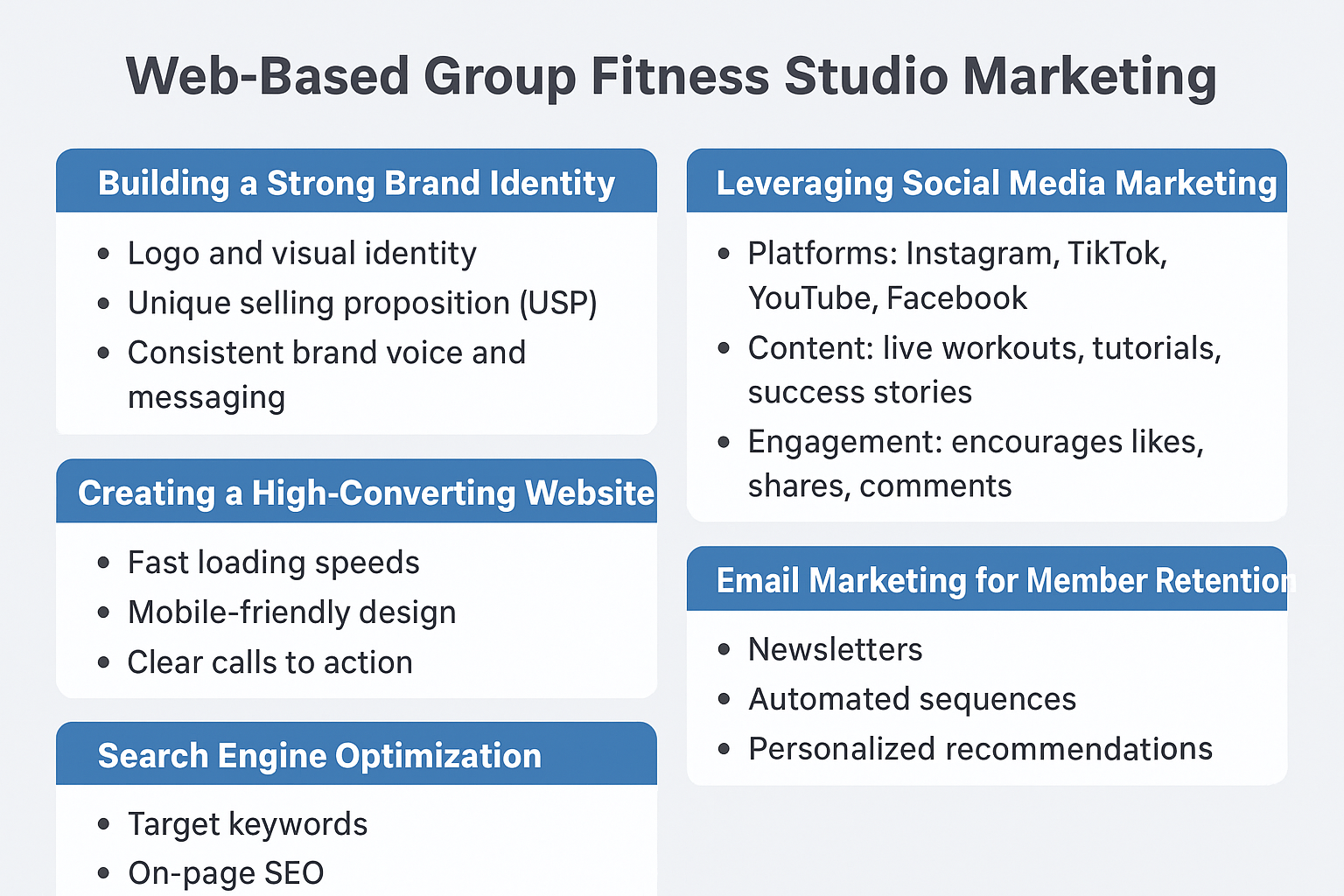
H3: Search Engine Optimization (SEO)
SEO is the foundation of online marketing for any web-based business, including pool fitness studios. By optimizing your website and content, you can attract members who are actively searching for aquatic fitness solutions.
Key SEO strategies for pool fitness studios include:
- Targeting the Right Keywords: Use keywords like “web-based pool fitness studio marketing,” “online pool fitness classes,” and “digital marketing for pool studios” naturally throughout your website, blog posts, and landing pages.
- Optimizing On-Page Elements: Include keywords in titles, meta descriptions, headings (H1, H2, H3), and alt text for images.
- Creating Informative Content: Publish blogs, guides, and FAQs answering questions such as “How to start online pool fitness classes” or “Benefits of aquatic workouts at home.”
- Local SEO: Even for online studios, targeting local search queries like “virtual pool fitness classes near me” can attract nearby members who prefer hybrid or live-streamed classes.
Fact: Studies show that 68% of online experiences begin with a search engine. Optimizing for SEO can dramatically increase your studio’s visibility and sign-ups.
H3: Social Media Marketing
Social media platforms are essential for promoting web-based pool fitness studios. They allow studios to connect with members, showcase workouts, and build a community.
Effective social media strategies include:
- Platform Selection: Focus on Instagram, Facebook, TikTok, and YouTube for visual content like exercise demonstrations, live streams, and member testimonials.
- Engaging Content: Post short video workouts, behind-the-scenes clips, tips for aquatic fitness, and motivational posts to keep followers engaged.
- Paid Social Ads: Target health-conscious audiences with specific demographics, locations, and interests to increase conversions.
- Community Interaction: Respond to comments, host Q&A sessions, and encourage user-generated content to strengthen brand loyalty.
Example: A Florida-based online pool fitness studio gained 50% more trial sign-ups after running a month-long Instagram campaign showcasing 1-minute aquatic exercise videos.
H3: Email Marketing
Email marketing remains one of the most effective ways to nurture leads and retain members. For web-based pool fitness studios, it can deliver personalized updates, class schedules, and promotions directly to your audience.
Email strategies include:
- Newsletters: Weekly or biweekly updates on class schedules, new programs, or member success stories.
- Automation: Automated welcome emails for new members or reminders for upcoming classes.
- Personalization: Tailor content based on member preferences or past participation, such as suggesting advanced workouts for long-term members.
- Exclusive Offers: Provide discounts, free trials, or early access to new classes to keep members engaged.
Stat: Email marketing has an average ROI of 42:1, making it a cost-effective channel for driving retention and conversions.
H3: Paid Advertising
Paid advertising can accelerate member acquisition for web-based pool fitness studios, particularly when combined with SEO and social media strategies.
- Google Ads: Target search queries like “online pool fitness classes” or “virtual aquatic workouts.”
- Social Media Ads: Run paid campaigns on Instagram, Facebook, or TikTok with clear calls to action.
- Retargeting: Show ads to people who visited your website but didn’t sign up, increasing the chances of conversion.
Tip: Always track your campaigns with analytics to measure which ads convert the best and adjust your strategy accordingly.
H3: Content Marketing
Creating valuable content positions your studio as an authority in aquatic fitness while attracting organic traffic.
Content ideas for web-based pool fitness studios:
- How-to Guides: “How to Start Web-Based Pool Fitness at Home”
- Blog Posts: Cover topics like the benefits of aqua workouts, swimming safety tips, or hybrid fitness models.
- Video Tutorials: Step-by-step exercises and class previews
- FAQs: Answer common member questions about virtual aquatic fitness
Example Table: Types of Content and Benefits
| Content Type | Purpose | SEO Benefit |
|---|---|---|
| Blog Posts | Educate and attract new members | Rank for long-tail keywords |
| Video Tutorials | Demonstrate workouts visually | Increase engagement and time-on-site |
| Social Media Posts | Build community and awareness | Drive traffic to website |
| Email Newsletters | Retain members and promote classes | Enhance member loyalty |
Content marketing not only drives traffic but also strengthens your brand authority and encourages sign-ups for your web-based pool fitness programs.Website Optimization for Web-Based Pool Fitness Studios
A well-optimized website is the cornerstone of any web-based pool fitness studio marketing strategy. It not only attracts potential members but also converts visitors into paying clients. An effective website combines user-friendly design, strong visuals, clear calls-to-action, and reliable analytics to maximize engagement and sales.
H3: User-Friendly Website Design
The design of your website should make it easy for visitors to find information and join your classes. Key elements include:
- Clear Navigation: Menus should include class schedules, pricing, testimonials, and an easy sign-up process.
- Mobile Optimization: With many users accessing content via smartphones or tablets, your site must be mobile-friendly.
- Fast Loading Times: Compress images and reduce unnecessary scripts to ensure quick page loading.
- Professional Visuals: Use high-quality images or videos of your pool, classes, and trainers to convey trust and credibility.
Tip: A well-designed website can increase conversions by up to 200%, according to HubSpot research.
H3: Landing Pages That Convert
Landing pages are vital for capturing leads and encouraging sign-ups. For a web-based pool fitness studio, focus on pages that clearly explain your programs, pricing, and membership benefits.
Best practices include:
- Clear Headline: Include your target keyword, e.g., “Join Our Web-Based Pool Fitness Studio Today.”
- Strong Call-to-Action (CTA): Buttons like “Sign Up for a Free Trial” or “Book Your First Class” should be prominent.
- Social Proof: Include testimonials, reviews, or success stories from current members.
- Visuals: Use images or videos to showcase workouts, instructors, and the pool environment.
Example: A dedicated landing page for a free 7-day trial of an online aquatic class can significantly increase email sign-ups when optimized with keyword-rich copy and engaging visuals.
H3: Tracking and Analytics
Understanding your audience and measuring results is crucial for web-based pool fitness studio marketing. Analytics provide insights into what works, what doesn’t, and where to focus your efforts.
- Google Analytics: Track traffic sources, popular pages, and user behavior to see which content attracts the most potential members.
- Conversion Tracking: Monitor sign-ups, class bookings, or downloads from lead magnets to measure marketing ROI.
- Behavior Analysis: Tools like Hotjar or Crazy Egg can show how visitors interact with your website, helping you optimize layouts and CTAs.
- A/B Testing: Experiment with headlines, visuals, and CTAs to determine which versions convert best.
Stat: Businesses that regularly analyze and optimize their websites see up to 30% higher conversion rates than those that don’t.Leveraging Video and Live Streaming
Video content and live streaming are powerful tools in web-based pool fitness studio marketing. They allow studios to showcase workouts, demonstrate exercises, and create a sense of community, which is essential for engaging members online.
H3: Benefits of Video Content for Pool Fitness
Video marketing offers several advantages for web-based pool fitness studios:
- Visual Demonstration: Aquatic workouts can be difficult to explain through text alone. Videos allow instructors to demonstrate techniques and proper form clearly.
- Increased Engagement: Studies show that websites with video content have up to 80% higher engagement rates.
- Brand Authority: High-quality video tutorials build credibility and show potential members that your studio offers professional and safe classes.
- Content Repurposing: Videos can be shared across social media, email newsletters, and blogs to maximize reach.
Example: Posting a 2-minute “Aqua Cardio Workout” video on Instagram can attract hundreds of views, generate leads, and encourage sign-ups for longer online classes.
H3: Live Streaming Classes Online
Live streaming brings a real-time, interactive experience to your members, enhancing community engagement for your web-based pool fitness studio.
Best practices for live streaming aquatic fitness classes include:
- Platform Selection: Use platforms like Zoom, YouTube Live, or Facebook Live to host classes. Each offers chat and engagement features.
- Promotion: Promote live sessions via email, social media, and your website at least a week in advance to maximize attendance.
- Engagement: Encourage participants to ask questions, share their progress, and interact with the instructor during the session.
- Recording: Save live sessions for members who couldn’t attend in real-time, providing on-demand access.
Tip: Offering a mix of live and on-demand classes increases flexibility and satisfaction, leading to higher retention rates.
H3: Video Marketing Strategy
For maximum impact, incorporate a structured video marketing strategy into your online promotion plan:
- Content Planning: Decide which classes, tutorials, or educational content to film each month.
- SEO Optimization: Include keywords in video titles, descriptions, and tags (e.g., “web-based pool fitness studio marketing,” “online aqua fitness classes”).
- Cross-Promotion: Share videos across multiple channels like social media, YouTube, and email newsletters.
- Analytics Tracking: Monitor views, engagement, and conversions to adjust future video content.
Fact: 87% of businesses report that video marketing increases traffic and customer engagement, making it an essential tool for online aquatic fitness studios.
By leveraging video and live streaming, web-based pool fitness studios can create engaging, educational, and interactive experiences that attract new members, retain existing ones, and strengthen their brand presence online.Social Proof and Reputation Management
In the competitive landscape of web-based pool fitness studios, social proof and reputation management play a critical role in attracting and retaining members. People are more likely to trust a studio with positive reviews, testimonials, and a strong online presence, especially when choosing an online fitness program.
H3: Collecting and Showcasing Reviews
Member reviews and testimonials are a powerful form of social proof. They build credibility and show potential clients that your web-based pool fitness studio delivers real results.
Strategies to collect and leverage reviews:
- Google Reviews: Encourage members to leave feedback on Google to improve your local and organic search visibility.
- Social Media Testimonials: Share screenshots or videos of members’ success stories on Instagram, Facebook, or TikTok.
- Website Integration: Create a dedicated “Testimonials” page highlighting positive feedback, transformations, or class experiences.
- Video Testimonials: Record short interviews with members sharing their progress and satisfaction with your classes.
Fact: 88% of consumers trust online reviews as much as personal recommendations, making them essential for building credibility.
H3: Building Trust Online
Beyond reviews, trust is built through consistent, transparent, and professional online communication. Strategies for enhancing your studio’s reputation include:
- Highlighting Certifications and Expertise: Display instructor certifications, safety standards, and years of experience prominently on your website and social profiles.
- Sharing Member Success Stories: Regularly showcase achievements, transformations, or milestones from your members.
- Transparency in Pricing and Policies: Clearly outline class packages, cancellation policies, and membership terms to build confidence.
- Active Engagement: Respond promptly to comments, questions, or complaints on social media, email, and review platforms.
Example: A web-based pool fitness studio that prominently features instructor credentials, member transformations, and clear pricing saw a 40% increase in sign-ups over six months compared to competitors without visible social proof.
H3: Leveraging Social Proof for Marketing Campaigns
Integrate social proof into your marketing campaigns to boost conversions:
- Ads: Include member testimonials or before-and-after photos in paid campaigns.
- Email Campaigns: Share success stories and class reviews to encourage sign-ups or upgrades.
- Landing Pages: Feature real member feedback alongside CTAs to strengthen trust.
By actively managing your reputation and leveraging social proof, web-based pool fitness studios can establish credibility, attract new members, and maintain a loyal community of participants.Partnerships and Influencer Marketing
Collaborations and influencer marketing are powerful tools for growing your web-based pool fitness studio. By partnering with influencers, brands, or fitness experts, studios can expand their reach, attract new members, and build credibility in the aquatic fitness niche.
H3: Collaborating with Fitness Influencers
Fitness influencers can help promote your web-based pool fitness studio to a highly engaged audience.
Strategies for influencer collaborations include:
- Finding Relevant Influencers: Look for influencers who focus on fitness, wellness, or aquatic workouts. Micro-influencers (10K–50K followers) often have higher engagement rates than large accounts.
- Sponsored Content: Have influencers create videos demonstrating your pool workouts or sharing their experiences with your online classes.
- Affiliate Programs: Offer influencers a commission for every new member they bring in, incentivizing promotion.
- Social Media Takeovers: Allow influencers to host a live class or share content on your social channels, giving their followers a reason to engage.
Case Study: A mid-sized online pool fitness studio partnered with a local fitness influencer to run a 2-week live aqua workout challenge, resulting in a 25% increase in memberships and a surge in social media engagement.
H3: Partnering with Related Brands
Strategic brand partnerships can increase visibility and credibility for your web-based pool fitness studio.
Potential partnership opportunities include:
- Swimwear Brands: Co-promote products during online classes or social campaigns.
- Fitness Equipment Suppliers: Offer joint promotions for resistance bands, aqua dumbbells, or other aquatic workout tools.
- Health and Wellness Apps: Collaborate on challenges or online programs to reach a broader audience.
- Local Businesses: Cross-promotions with local gyms, wellness centers, or physiotherapists to offer hybrid or complementary programs.
Example Table: Partnership Opportunities and Benefits
| Partner Type | Marketing Benefit | Example Use Case |
|---|---|---|
| Fitness Influencers | Access to engaged audiences | Instagram or TikTok workout promotion |
| Swimwear Brands | Product co-promotion | Offer branded swimwear discounts |
| Fitness Equipment Suppliers | Encourage product + class bundles | Aqua dumbbell promotion with online classes |
| Health Apps | Cross-promotional campaigns | Joint fitness challenge or guide |
By leveraging partnerships and influencer marketing, web-based pool fitness studios can tap into new audiences, build authority, and accelerate growth in a competitive digital landscape.Measuring Marketing Success
Tracking and analyzing results is a crucial part of web-based pool fitness studio marketing. Without measurement, it’s impossible to know which strategies are effective, which need improvement, or how to maximize ROI. Implementing proper metrics and analytics ensures your marketing efforts are data-driven and results-oriented.
H3: Key Performance Indicators (KPIs)
To evaluate the success of your marketing campaigns, monitor the following KPIs:
- Website Traffic: Number of visitors, unique sessions, and page views. This shows how well your SEO and content marketing efforts are attracting potential members.
- Conversion Rates: Track sign-ups, class bookings, and free trial registrations to measure how effectively your website and landing pages convert visitors.
- Email Engagement: Open rates, click-through rates, and unsubscribes indicate the effectiveness of your email marketing campaigns.
- Social Media Metrics: Likes, shares, comments, and follower growth reveal the impact of social media marketing.
- Retention Rates: Measure how many members continue participating in classes over time. Retention is a critical metric for long-term business growth.
Fact: Businesses that track and analyze their KPIs consistently are 12x more likely to see higher ROI than those that don’t.
H3: Adjusting Strategies Based on Results
Monitoring KPIs allows you to optimize your marketing strategy continuously:
- Content Performance: Identify which blog posts, videos, or social media content generate the most engagement and replicate successful formats.
- Ad Campaign Analysis: Use metrics like cost-per-click (CPC), click-through rates (CTR), and conversions to fine-tune paid advertising campaigns.
- SEO Optimization: Monitor search rankings and organic traffic for target keywords like “web-based pool fitness studio marketing” to adjust content and meta tags.
- A/B Testing: Test different headlines, images, or CTAs on landing pages and emails to determine which versions convert best.
- Member Feedback: Collect reviews, surveys, or suggestions to improve offerings, address pain points, and enhance the overall experience.
Tip: Use tools like Google Analytics, HubSpot, or Mailchimp analytics dashboards to centralize data and track performance efficiently.
H3: Reporting and Continuous Improvement
Create regular reports (weekly, monthly, or quarterly) to track the performance of your marketing initiatives. Documenting successes and failures helps:
- Identify high-performing strategies to scale.
- Detect low-performing campaigns to adjust or eliminate.
- Justify marketing investments with measurable results.
- Align marketing goals with business objectives, such as increasing memberships or online engagement.
By consistently measuring marketing success, web-based pool fitness studios can make informed decisions, improve campaign performance, and ensure sustainable growth.Common Challenges in Web-Based Pool Fitness Studio Marketing
While web-based pool fitness studios offer unique opportunities for growth, they also face several challenges. Understanding these obstacles allows studio owners to proactively develop strategies to overcome them and maintain a competitive edge.
H3: Standing Out in a Competitive Market
The online fitness industry is highly competitive, with countless studios and apps vying for attention. To differentiate your web-based pool fitness studio, consider:
- Unique Value Proposition (UVP): Highlight what makes your aquatic programs different, such as specialized workouts, experienced instructors, or flexible scheduling.
- Targeted Messaging: Focus marketing efforts on a niche audience, such as seniors, postpartum clients, or high-intensity aqua fitness enthusiasts.
- Engaging Content: Produce high-quality videos, blogs, and social media posts that showcase your studio’s personality and expertise.
Fact: Businesses that clearly communicate their UVP are three times more likely to attract and retain customers in crowded markets.
H3: Technical Challenges
Operating a web-based studio comes with technical considerations that can impact marketing success:
- Website Reliability: Slow-loading pages or broken links can hurt user experience and conversions.
- Booking and Payment Systems: Integrating seamless online registration and payment options is essential for smooth member onboarding.
- Live Streaming Quality: Poor video quality or connectivity issues can reduce engagement and lead to negative reviews.
Solutions: Use robust platforms like Zoom, Mindbody, or Kajabi, optimize website speed, and test all systems regularly to ensure a smooth experience for members.
H3: Retaining Members Digitally
Maintaining engagement in a purely online environment can be challenging:
- Reduced Accountability: Members may drop out if they feel disconnected from the instructor or community.
- Competing Online Content: With countless free workouts available, studios must provide added value to keep members engaged.
- Motivation Challenges: Members may struggle to stay committed without the physical presence of a pool or community.
Retention Strategies:
- Gamify workouts with challenges and milestones.
- Offer personalized coaching or progress tracking.
- Build online communities via private social groups or forums.
- Provide incentives for consistent attendance, like discounts or rewards.
By addressing these common challenges proactively, web-based pool fitness studios can create a sustainable online presence, retain loyal members, and stand out in the competitive digital fitness landscape.Future Trends in Web-Based Pool Fitness Marketing
The digital fitness landscape is constantly evolving, and web-based pool fitness studios must stay ahead of trends to remain competitive. Understanding emerging technologies and shifting consumer behaviors allows studios to innovate, attract new members, and enhance online engagement.
H3: Virtual Reality and Immersive Workouts
Virtual reality (VR) is transforming the online fitness experience. For web-based pool fitness studios, VR offers:
- Immersive Training: Members can experience simulated pool environments for more engaging workouts.
- Interactive Classes: VR allows instructors to provide real-time feedback on movements, improving technique and safety.
- Motivation and Gamification: Interactive challenges and immersive visuals increase member engagement and retention.
Example: Some aquatic fitness startups are developing VR-compatible pool workouts, allowing participants to “swim” through virtual oceans while completing guided exercises.
H3: AI-Powered Marketing Tools
Artificial intelligence (AI) is increasingly used in digital marketing to streamline operations and personalize member experiences. Web-based pool fitness studios can leverage AI in several ways:
- Personalized Recommendations: Suggest classes based on members’ past participation and fitness goals.
- Automated Marketing Campaigns: AI tools can schedule emails, social media posts, and ad campaigns for maximum efficiency.
- Data Analytics: AI analyzes member engagement, retention patterns, and content performance to optimize marketing strategies.
- Chatbots: Provide instant support for inquiries, class registration, and troubleshooting.
Stat: Businesses using AI-powered marketing tools report up to 30% higher engagement and more efficient campaign management.
H3: Growth of Hybrid Fitness Models
Hybrid models that combine online and in-person classes are gaining popularity. Web-based pool fitness studios can use hybrid strategies to:
- Expand Reach: Offer online classes to remote participants while hosting small in-person sessions locally.
- Increase Retention: Members who participate both online and offline feel more connected to the community.
- Flexible Marketing Opportunities: Promote online and in-person programs using cross-channel campaigns.
Example: A California-based aquatic fitness studio created a hybrid program with live-streamed classes for busy professionals and in-person sessions for local members, resulting in 50% growth in membership over six months.
By embracing virtual reality, AI tools, and hybrid models, web-based pool fitness studios can stay ahead of competitors, offer innovative experiences, and continue attracting and retaining members in the rapidly evolving digital fitness space.Conclusion
In today’s digital-first world, web-based pool fitness studio marketing is no longer optional—it’s essential for attracting members, building brand authority, and sustaining long-term growth. By combining SEO, social media, email campaigns, video marketing, partnerships, and reputation management, studios can reach a broader audience and create an engaging online experience that keeps members coming back.
Key takeaways include:
- Attract New Members: Leverage SEO, paid ads, and content marketing to reach potential clients actively searching for online aquatic fitness solutions.
- Retain Current Members: Use email marketing, personalized engagement, and loyalty programs to maintain long-term participation.
- Build Brand Authority: Showcase social proof, certifications, and success stories to foster trust and credibility.
- Embrace Technology: Incorporate video, live streaming, AI tools, VR experiences, and hybrid models to enhance member experience and stay competitive.
- Measure and Optimize: Track KPIs, analyze performance data, and adjust marketing strategies for maximum ROI.
By implementing these strategies, web-based pool fitness studios can not only grow their memberships but also create a thriving digital community centered around aquatic health and wellness. Whether you’re starting a new studio or expanding an existing one, a well-executed online marketing strategy will ensure your studio stands out, engages members effectively, and achieves long-term success.
Final Thought: The key to success is combining high-quality online classes with a strategic, data-driven marketing approach that emphasizes engagement, trust, and innovation.
This concludes the full, comprehensive, SEO-optimized blog post on web-based pool fitness studio marketing.Recommended Images, Charts, and Alt Text
| Section | Recommended Visual | Purpose / Notes | Alt Text (SEO Optimized) |
|---|---|---|---|
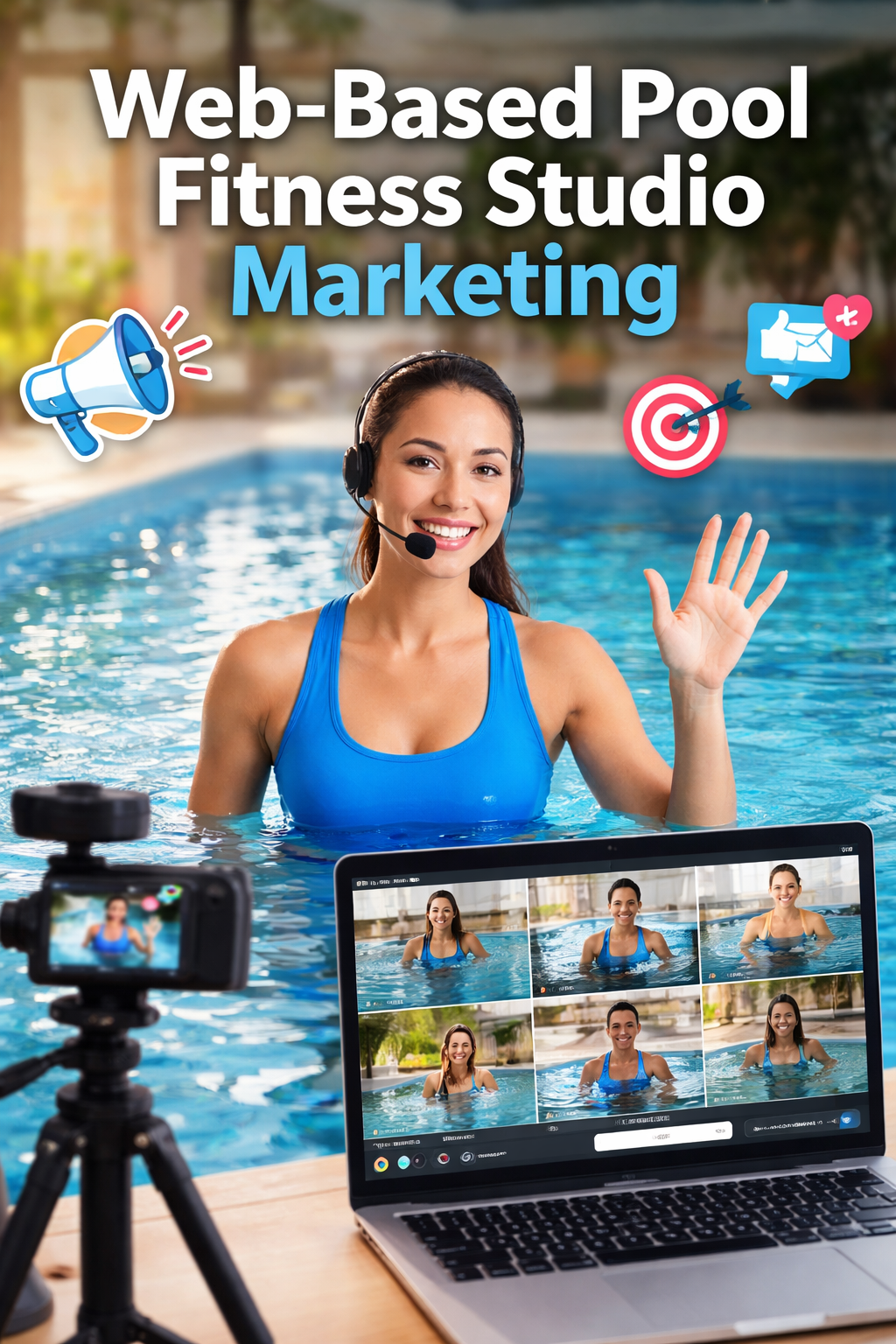
| Introduction | Hero image of an instructor leading an online pool fitness class | Capture attention, establish topic | “Instructor leading a web-based pool fitness studio class online” |
| What is Web-Based Pool Fitness Studio Marketing? | Graphic showing online vs traditional fitness studio | Visualize difference between online and offline studios | “Comparison of web-based pool fitness studio vs traditional fitness studio marketing” |
| Key Marketing Goals | Infographic of attracting, retaining, and building awareness | Explain marketing goals visually | “Key marketing goals for web-based pool fitness studio: attract, retain, build awareness” |
| Essential Marketing Strategies | Multi-platform marketing icons (SEO, social media, email, paid ads, content) | Visual representation of strategies | “Digital marketing strategies for web-based pool fitness studio marketing” |
| Website Optimization | Screenshot or mockup of a user-friendly aquatic fitness landing page | Show best practices for design and conversion | “Optimized landing page for web-based pool fitness studio with clear CTA and visuals” |
| Video and Live Streaming | Image of a live-streamed pool fitness class or video tutorial | Highlight video engagement | “Instructor demonstrating live-streamed pool fitness class online” |
| Social Proof & Reputation | Graphic of 5-star reviews or member testimonials | Visual reinforcement of trust | “Member reviews and testimonials for web-based pool fitness studio marketing” |
| Partnerships & Influencer Marketing | Image of fitness influencer collaborating with a pool studio | Showcase partnerships | “Fitness influencer promoting web-based pool fitness studio classes online” |
| Measuring Success | Chart showing KPIs like traffic, conversion, engagement | Visualize analytics for strategy | “Chart showing key performance indicators for web-based pool fitness studio marketing” |
| Common Challenges | Illustration of challenges like tech issues, competition, retention | Highlight common pain points | “Common challenges faced by web-based pool fitness studios online” |
| Future Trends | Image showing VR aquatic workout or AI tools dashboard | Represent innovative trends | “Future trends in web-based pool fitness studio marketing: VR and AI-powered tools” |
| Conclusion | Inspirational image of members enjoying online pool class | Motivate readers to take action | “Happy members participating in web-based pool fitness studio classes online” |
Tips for Images and Visuals:
Videos: Include captions or transcripts for accessibility and SEO benefits.
Compress Images: Use formats like JPEG or WebP to reduce loading time without sacrificing quality.
Use Charts/Infographics: Turn statistics, KPIs, and strategies into easy-to-read visuals.
Consistent Branding: Use your studio’s color palette and fonts to maintain professional and cohesive visuals.
Alt Text Optimization: Always include your target keyword naturally in image alt text to improve SEO.Web-Based Pool Fitness Studio Marketing: Strategies to Grow Memberships
Marketing a web-based pool fitness studio involves promoting your aquatic fitness programs entirely online, through social media, websites, email campaigns, and paid advertising. Unlike traditional methods like flyers or local ads, this approach allows you to reach your audience wherever they are online. A web-based pool fitness studio can offer on-demand classes, live-streamed sessions, or hybrid memberships combining online and in-person experiences. Highlighting flexibility, accessibility, and safety is essential to attract members who prefer virtual aquatic workouts.
Marketing your online studio offers several benefits:
- Broader Audience Reach: Digital campaigns attract members beyond your local area using SEO and social media ads.
- Cost-Effective Advertising: Social media ads and email campaigns cost less than print advertising while maintaining long-term engagement.
- Enhanced Member Engagement: Online platforms allow direct interaction via private groups, live chats, and newsletters.
- Measurable Results: Analytics tools help track which campaigns drive sign-ups, popular classes, and content performance.
- Brand Authority: Regular content, tutorials, and member success stories position your studio as professional and reliable.
Key Marketing Goals
Attracting New Members
The main goal is expanding your member base. SEO, paid advertising, content marketing, and lead magnets are essential:
- SEO: Target keywords like “online pool fitness classes” and “web-based pool fitness studio marketing.”
- Paid Ads: Use Google or social media ads targeting specific demographics.
- Content Marketing: Publish blogs and videos answering questions like “benefits of online pool workouts.”
- Lead Magnets: Offer free trials or downloadable guides in exchange for email addresses.
Retaining Current Members
Retention is more cost-effective than acquisition:
- Email Newsletters: Send class updates, tips, and promotions.
- Community Building: Private social media groups or forums strengthen engagement.
- Personalization: Provide workout recommendations or progress tracking.
- Loyalty Programs: Reward long-term members with bonuses or exclusive content.
Building Brand Awareness
Visibility and credibility attract new members:
- Social Media Presence: Post instructional videos, member transformations, and behind-the-scenes content.
- Thought Leadership: Blog about aquatic fitness benefits to position your studio as an authority.
- Partnerships: Collaborate with influencers or local brands to expand your reach.
- Consistent Branding: Maintain cohesive visuals and a clear mission statement.
Essential Marketing Strategies
SEO: Optimize your website with keywords in titles, headings, meta descriptions, and alt text. Create informative content targeting relevant search terms.
Social Media Marketing: Share video workouts, tips, and member success stories on Instagram, Facebook, TikTok, and YouTube. Use paid campaigns and encourage user interaction.
Email Marketing: Send newsletters, automated reminders, and personalized content. Offer exclusive deals or free trials to maintain engagement.
Paid Advertising: Use Google Ads and social media ads with strong CTAs. Retarget visitors who didn’t sign up initially.
Content Marketing: Create blogs, guides, video tutorials, FAQs, and infographics to educate and engage potential members.
Website Optimization
A well-optimized website converts visitors into members:
- User-Friendly Design: Clear navigation, mobile optimization, fast loading, and professional visuals.
- Landing Pages: Strong headlines, CTAs, visuals, and social proof improve conversions.
- Tracking & Analytics: Use Google Analytics, conversion tracking, and A/B testing to monitor and optimize performance.
Leveraging Video and Live Streaming
Video content demonstrates exercises, engages members, and builds brand authority.
- Benefits: Higher engagement, clear visual instruction, and content repurposing across platforms.
- Live Streaming: Interactive real-time classes build community and provide flexibility.
- Video Strategy: Plan content, optimize for SEO, cross-promote, and track performance.
Social Proof and Reputation Management
Trust drives membership for online studios:
- Collect Reviews: Use Google Reviews, testimonials, and video success stories.
- Build Trust: Highlight instructor certifications, member transformations, and clear policies.
- Use Social Proof in Marketing: Include testimonials in ads, emails, and landing pages to boost conversions.
Partnerships and Influencer Marketing
Collaborations expand reach and authority:
- Influencers: Partner with fitness influencers for sponsored content, affiliate programs, or social media takeovers.
- Brand Partnerships: Collaborate with swimwear, fitness equipment, health apps, or local businesses for co-promotions.
Measuring Marketing Success
Track metrics to optimize results:
- KPIs: Website traffic, conversion rates, email engagement, social media metrics, retention rates.
- Strategy Adjustments: Analyze content performance, ad campaigns, SEO rankings, and member feedback.
- Continuous Improvement: Create reports, scale successful campaigns, and adjust underperforming strategies.
Common Challenges
Online pool fitness studios face challenges such as:
- Competition: Differentiation through unique value propositions and targeted messaging is essential.
- Technical Issues: Website reliability, booking/payment systems, and streaming quality must be maintained.
- Member Retention: Combat reduced accountability and competing online content with gamification, personalized coaching, and community engagement.
Future Trends
Emerging trends can help studios stay competitive:
- Virtual Reality: Immersive workouts improve engagement and technique.
- AI Tools: Personalize recommendations, automate marketing, and analyze data efficiently.
- Hybrid Fitness Models: Combine online and in-person classes to increase reach and retention.
Conclusion
Effective web-based pool fitness studio marketing combines SEO, social media, email, video, partnerships, and reputation management. By focusing on attracting new members, retaining existing ones, building authority, leveraging technology, and measuring results, studios can thrive in the digital fitness space. Consistently providing value, engaging members, and optimizing marketing efforts ensures long-term growth and a successful online aquatic fitness community.